


Can Excimer Equipment be used for ceramic processing?
In the ever - evolving world of materials processing, the quest for efficient, precise, and innovative techniques is unending. Ceramics, one of the oldest and most widely used materials, have a vast array of applications ranging from construction to high - tech electronics. The question that often arises is whether excimer equipment can be effectively used for ceramic processing. As a supplier of Excimer Equipment, I am well - positioned to explore this topic in depth.
Understanding Excimer Technology
Before delving into the application of excimer equipment in ceramic processing, it is essential to understand what excimer technology is. Excimer, short for "excited dimer," refers to a short - lived dimeric or heterodimeric molecule formed from two atoms or molecules, usually noble gas halides or noble gas oxides. When electrically excited, these molecules can produce intense ultraviolet (UV) or vacuum ultraviolet (VUV) light.
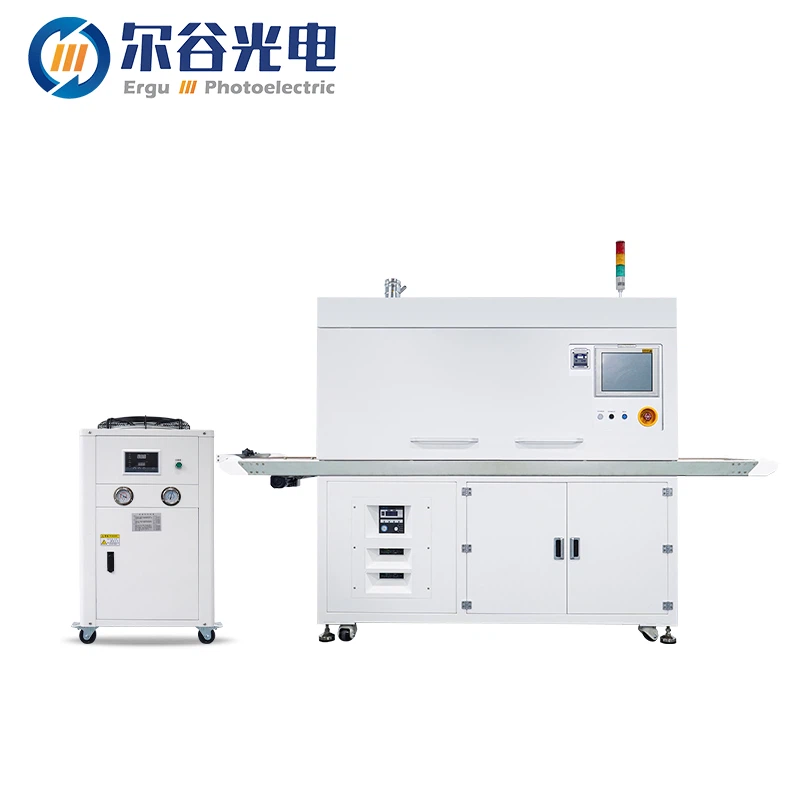
Excimer lamps and excimer systems are the two primary forms of excimer equipment. Excimer lamps are simple and cost - effective sources of monochromatic UV or VUV light. They are often used in applications where a uniform and intense light source is required. Excimer systems, on the other hand, are more complex and can include various components such as lasers, optical systems, and control units. They offer higher precision and flexibility, making them suitable for more advanced processing tasks.
Potential Applications of Excimer Equipment in Ceramic Processing
Surface Cleaning and Activation
One of the most straightforward applications of excimer equipment in ceramic processing is surface cleaning and activation. Ceramics can have various contaminants on their surfaces, such as organic residues, adsorbed gases, and inorganic particles. The high - energy UV or VUV light emitted by excimer equipment can break the chemical bonds of these contaminants, causing them to decompose and volatilize.
For example, the 172 nm light emitted by a xenon excimer lamp can generate ozone in the air. Ozone is a powerful oxidizing agent that can react with organic contaminants on the ceramic surface, converting them into carbon dioxide and water. This process not only cleans the surface but also activates it by creating reactive sites. An activated ceramic surface has better adhesion properties, which is crucial for subsequent coating or bonding processes.
Etching and Micro - machining
Excimer lasers in excimer systems can be used for precision etching and micro - machining of ceramics. The short - pulse, high - energy nature of excimer lasers allows for precise removal of material from the ceramic surface. When the laser beam is focused on the ceramic, the intense energy is absorbed by the material, causing it to vaporize or ablate.
This process can be used to create micro - features on ceramics, such as microchannels, microholes, and surface patterns. For example, in microfluidic applications, excimer laser - etched ceramic substrates can be used to create complex fluidic networks. In addition, the high precision of excimer laser etching can be used to fabricate ceramic components with tight tolerances, which are often required in high - tech industries.
Annealing and Crystallization
Ceramics often need to be annealed or crystallized to achieve the desired mechanical, electrical, or optical properties. Traditional annealing methods typically involve high - temperature treatments in a furnace, which can be time - consuming and may cause thermal stress in the ceramic.
Excimer equipment offers an alternative approach. The UV or VUV light can be used to induce localized heating and structural changes in the ceramic. For example, excimer lamps can be used to selectively heat the surface of a ceramic, promoting crystallization without subjecting the entire material to high temperatures. This can reduce the processing time and minimize thermal stress, resulting in better - quality ceramic products.
Advantages of Using Excimer Equipment in Ceramic Processing
High Precision
Excimer equipment, especially excimer lasers, offers extremely high precision. The short - pulse nature of the laser allows for accurate control of the material removal or modification process. This is particularly important in applications where micro - scale features need to be created on ceramics, such as in microelectronics and medical devices.
Non - contact and Non - thermal Process
Excimer processing is a non - contact process, which means that there is no physical contact between the processing equipment and the ceramic substrate. This eliminates the risk of mechanical damage to the ceramic. Additionally, in some cases, excimer processing can be carried out at relatively low temperatures, reducing the thermal stress on the ceramic. This is beneficial for ceramics that are sensitive to high temperatures or have complex geometries.
Flexibility
Excimer equipment can be easily adjusted to meet different processing requirements. The wavelength of the excimer light can be selected according to the specific properties of the ceramic and the processing task. For example, different wavelengths of excimer light have different absorption characteristics in ceramics, which can be used to achieve different processing effects. Moreover, the power, pulse frequency, and beam profile of the excimer laser can also be controlled, providing great flexibility in the processing process.
Challenges and Limitations
Material Compatibility
Not all ceramics are equally suitable for excimer processing. Some ceramics may have low absorption coefficients for the UV or VUV light emitted by excimer equipment, which can reduce the processing efficiency. Additionally, certain ceramics may be prone to damage or color changes during excimer processing, especially if the processing parameters are not properly optimized.

Equipment Cost and Maintenance
Excimer equipment, especially high - performance excimer systems, can be relatively expensive to purchase. In addition, the maintenance of excimer equipment requires specialized knowledge and skills. The lamps and other components of the equipment have a limited lifespan and need to be replaced regularly, which can add to the overall cost of processing.
Our Role as an Excimer Equipment Supplier
As a supplier of Excimer Equipment, we are committed to providing our customers with high - quality products and comprehensive technical support. We understand the challenges involved in ceramic processing using excimer equipment, and we work closely with our customers to develop customized solutions.
Our team of experts can help customers select the most suitable excimer equipment for their specific ceramic processing needs. We offer training and consultation services to ensure that our customers can operate the equipment effectively and achieve the best processing results. In addition, we provide prompt after - sales service to ensure the long - term reliability of our equipment.
Contact for Procurement and Consultation
If you are interested in using excimer equipment for your ceramic processing applications or have any questions about our products, we encourage you to contact us. Our dedicated sales team is ready to discuss your requirements, provide detailed product information, and offer competitive quotes. Let's work together to explore the potential of excimer equipment in ceramic processing and achieve new heights in your manufacturing processes.
References
- Sze, S. M., & Ng, K. K. (2007). Physics of Semiconductor Devices. Wiley.
- Puls, J. (2016). Excimer lasers: From ultraviolet light sources to industrial production tools. Journal of Physics: Conference Series, 706(1), 012001.
- Florian, M. (2012). Laser Processing of Engineering Ceramics. Springer.


