In the manufacturing and processing industries, UV glue curing lamps play a crucial role in quickly solidifying UV - sensitive adhesives, inks, and coatings. As a supplier of UV Glue Curing Lamps, I understand the importance of curing efficiency for our customers. Higher curing efficiency not only increases production speed but also reduces costs and improves product quality. In this blog, I will share some practical methods to enhance the curing efficiency of UV glue curing lamps.


1. Select the Appropriate UV Lamp
The first step in improving curing efficiency is to choose the right UV lamp for the specific application. Different UV lamps emit different wavelengths and intensities of UV light, which are crucial for the curing process of UV glue.
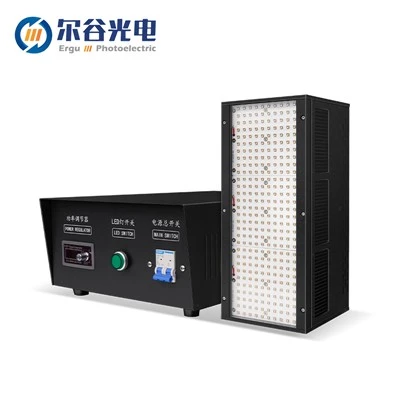
- Wavelength Matching: UV glue is formulated to be sensitive to specific wavelengths of UV light. For example, most common UV glues are sensitive to UVA (320 - 400 nm) and UVB (280 - 320 nm) wavelengths. Our UV Glue Curing Lamp is designed to emit light in the appropriate wavelength range to ensure effective curing. By selecting a lamp that matches the glue's absorption spectrum, we can maximize the energy transfer from the lamp to the glue, thus accelerating the curing process.
- Intensity and Power: The intensity of UV light is directly related to the curing speed. Higher - intensity lamps can cure the glue faster. However, it is important to balance the intensity with the power consumption and the heat generated. Our high - power UV Light Curing Lamp provides sufficient UV intensity while also being energy - efficient, which is a great choice for applications requiring high - speed curing.
2. Optimize the Lamp Installation and Positioning
Proper installation and positioning of the UV lamp can significantly affect the curing efficiency.
- Distance from the Workpiece: The distance between the UV lamp and the UV glue - coated workpiece is critical. If the distance is too far, the UV light intensity reaching the glue will be reduced, resulting in slower curing. On the other hand, if the distance is too close, it may cause over - heating of the glue or the workpiece, which can lead to poor adhesion or even damage. We recommend following the manufacturer's guidelines for the optimal distance. In general, a distance of 5 - 15 cm is suitable for most applications.
- Angle of Irradiation: The angle at which the UV light hits the workpiece also matters. To ensure uniform curing, the lamp should be positioned so that the UV light is evenly distributed over the entire surface of the glue. For irregularly shaped workpieces, multiple lamps or adjustable lamp fixtures may be required to achieve complete and consistent curing.
3. Control the Curing Environment
The environment in which the curing process takes place can have a significant impact on the efficiency of the UV glue curing lamp.
- Temperature and Humidity: Temperature and humidity can affect the viscosity and reactivity of the UV glue. Higher temperatures generally increase the curing speed, but excessive heat can cause the glue to bubble or crack. The ideal temperature for most UV glue curing processes is between 20 - 30°C. Humidity should also be controlled, as high humidity can slow down the curing process and may even cause the glue to absorb moisture, leading to reduced adhesion.
- Air Circulation: Good air circulation is necessary to remove the heat generated during the curing process and to prevent the accumulation of ozone, which is a by - product of UV light. Proper ventilation can also help to maintain a stable temperature and humidity in the curing area, thus improving the overall curing efficiency.
4. Use Reflectors and Optics
Reflectors and optics can be used to enhance the efficiency of the UV glue curing lamp by focusing and directing the UV light.
- Reflectors: Reflectors can be installed around the UV lamp to redirect the light that would otherwise be wasted. By reflecting the light back towards the workpiece, the effective intensity of the UV light on the glue surface can be increased. Our lamps are often equipped with high - quality reflectors that are designed to maximize the light output and improve the curing efficiency.
- Optics: Specialized optics, such as lenses and filters, can be used to shape the UV light beam and to control the wavelength and intensity distribution. For example, a focusing lens can be used to concentrate the UV light on a small area, which is useful for precision curing applications.
5. Regular Maintenance of the UV Lamp
Regular maintenance of the UV glue curing lamp is essential to ensure its long - term performance and efficiency.
- Cleaning: Over time, dust and debris can accumulate on the surface of the lamp, which can reduce the UV light output. We recommend cleaning the lamp regularly with a soft, lint - free cloth and a mild cleaning solution. Avoid using abrasive materials that may scratch the lamp surface.
- Replacement of Components: The electrodes and other components of the UV lamp will wear out over time. It is important to replace these components according to the manufacturer's recommendations. Using worn - out components can not only reduce the curing efficiency but also increase the risk of lamp failure.
6. Consider the Type of UV Glue
Different types of UV glue have different curing characteristics. Some glues are formulated for fast curing, while others are designed for better adhesion or flexibility.
- Fast - Curing Glues: If high - speed production is the priority, consider using fast - curing UV glues. These glues are designed to react quickly to UV light, which can significantly reduce the curing time. Our UV Ink Curing Lamp is also suitable for fast - curing UV inks, which can improve the printing speed in the printing industry.
- Compatibility: Ensure that the UV glue is compatible with the UV lamp. Some glues may require a specific type of lamp or a certain range of UV wavelengths for optimal curing.
Conclusion
Improving the curing efficiency of a UV glue curing lamp involves a combination of factors, including lamp selection, installation, environmental control, and maintenance. As a supplier of UV Glue Curing Lamps, we are committed to providing our customers with high - quality products and professional advice to help them achieve the best curing results.
If you are interested in improving the curing efficiency of your UV glue curing process or are looking for a reliable UV Glue Curing Lamp supplier, we welcome you to contact us for more information and to discuss your specific requirements. We are confident that our products and solutions can meet your needs and help you enhance your production efficiency.
References
- "UV Curing Technology: Principles and Applications" by John Wiley & Sons
- "Handbook of Adhesives" edited by Irving Skeist