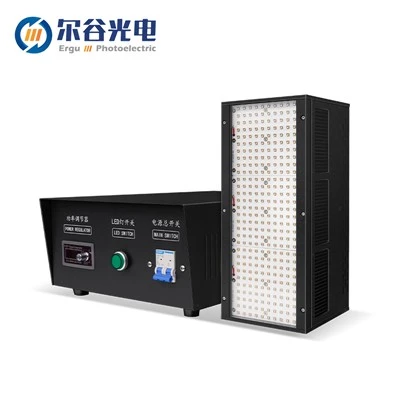
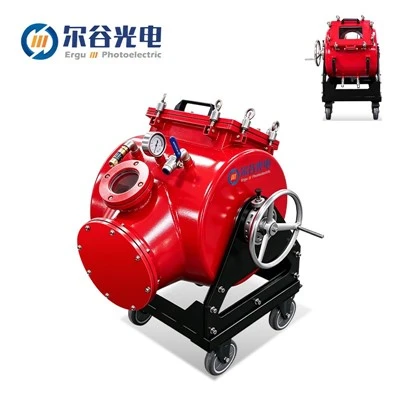
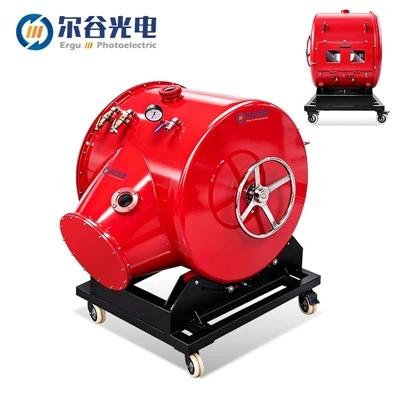
As a supplier of Excimer Systems, I often get asked about the beam quality of these remarkable pieces of equipment. In this blog post, I'll delve into what beam quality means in the context of an Excimer System, why it matters, and how it can impact your applications.
Understanding Excimer Systems
Before we dive into beam quality, let's briefly understand what an Excimer System is. Excimer Systems are based on the principle of excimer lasers, which are a type of ultraviolet laser. These lasers are formed when a noble gas (such as argon, krypton, or xenon) is combined with a halogen gas (such as fluorine or chlorine) under high - energy conditions. The resulting excimer molecules are unstable and quickly decay, emitting a short - lived burst of ultraviolet light.
Excimer Systems find a wide range of applications, from semiconductor manufacturing and micro - machining to medical treatments and scientific research. You can learn more about Excimer Equipment and Excimer System on our website.
Defining Beam Quality
Beam quality is a crucial parameter that describes the characteristics of the laser beam emitted by an Excimer System. It is a measure of how well the beam conforms to an ideal Gaussian beam profile, which is a smooth, bell - shaped intensity distribution. A high - quality beam has a narrow beam divergence, a small spot size, and a high degree of spatial coherence.
One of the most common ways to quantify beam quality is by using the M² factor. The M² factor compares the divergence of the actual laser beam to that of an ideal Gaussian beam. An ideal Gaussian beam has an M² value of 1. In practice, most Excimer lasers have M² values greater than 1, typically ranging from 1.1 to 10 or more, depending on the design and operating conditions of the laser.
Why Beam Quality Matters
The beam quality of an Excimer System has a significant impact on its performance and suitability for different applications. Here are some key reasons why beam quality is important:
Precision in Micro - machining
In micro - machining applications, such as the fabrication of micro - structures on semiconductor wafers or the production of medical devices, high beam quality is essential. A beam with a small spot size and low divergence can be focused to a very fine point, allowing for precise material removal with minimal heat - affected zones. This results in higher - quality finished products with better dimensional accuracy and surface finish.
Efficiency in Laser - based Processes
A high - quality beam also improves the efficiency of laser - based processes. When the beam has a well - defined intensity distribution, it can interact more effectively with the target material. This means that less energy is wasted in the form of scattered light or heat, leading to higher process throughput and lower operating costs.
Uniformity in Surface Treatment
For surface treatment applications, such as laser cleaning or surface modification, beam quality is crucial for achieving uniform results. A beam with a consistent intensity profile across its cross - section ensures that the treatment is evenly applied to the surface, avoiding uneven wear or damage to the material.
Factors Affecting Beam Quality in Excimer Systems
Several factors can influence the beam quality of an Excimer System. Understanding these factors can help you optimize the performance of your system and ensure that you get the best possible beam quality for your applications.
Laser Cavity Design
The design of the laser cavity plays a critical role in determining the beam quality. The cavity is the region within the laser where the lasing action occurs, and its geometry and optical components can have a significant impact on the beam characteristics. For example, the use of high - quality mirrors with low surface roughness and precise curvature can help to reduce beam divergence and improve the beam profile.
Gas Mixture and Pressure
The gas mixture and pressure inside the laser chamber also affect beam quality. The composition of the gas mixture determines the wavelength and output power of the laser, while the pressure can influence the gain and the mode structure of the laser. Maintaining the correct gas mixture and pressure is essential for achieving stable and high - quality beam output.
Pulse Energy and Repetition Rate
The pulse energy and repetition rate of the laser can also impact beam quality. Higher pulse energies can cause thermal effects and optical nonlinearities within the laser cavity, which can degrade the beam quality. Similarly, high repetition rates can lead to gas heating and flow disturbances, which can also affect the beam characteristics.
Measuring and Improving Beam Quality
To ensure that your Excimer System is operating at its best, it is important to regularly measure and monitor the beam quality. There are several techniques available for measuring beam quality, including beam profilers and interferometers.
Beam profilers are used to measure the intensity distribution of the beam across its cross - section. They can provide detailed information about the beam shape, spot size, and divergence. Interferometers, on the other hand, are used to measure the spatial coherence of the beam, which is an important aspect of beam quality.
If you find that the beam quality of your Excimer System is not meeting your requirements, there are several steps you can take to improve it. These may include adjusting the operating parameters of the laser, such as the gas mixture, pressure, or pulse energy; optimizing the alignment of the optical components; or upgrading the laser cavity design.
Applications of High - Quality Excimer Beams
The high - quality beams produced by Excimer Systems have a wide range of applications across various industries. Here are some examples:


Semiconductor Manufacturing
In semiconductor manufacturing, Excimer lasers are used for a variety of processes, including photolithography, annealing, and laser ablation. High - quality beams are essential for achieving the high levels of precision and resolution required in the production of advanced semiconductor devices.
Medical Treatments
Excimer lasers are also widely used in medical treatments, such as laser eye surgery (LASIK), dermatology, and dentistry. The high - quality beams can be precisely controlled to target specific tissues with minimal damage to surrounding areas, making them a safe and effective treatment option.
Scientific Research
In scientific research, Excimer lasers are used in a variety of fields, including spectroscopy, plasma physics, and materials science. The high - energy, short - pulse nature of Excimer lasers, combined with their high beam quality, makes them ideal for studying the fundamental properties of matter and for performing advanced experiments.
Conclusion
In conclusion, the beam quality of an Excimer System is a critical parameter that can significantly impact its performance and suitability for different applications. A high - quality beam with a narrow divergence, small spot size, and high spatial coherence is essential for achieving precision, efficiency, and uniformity in laser - based processes.
As a supplier of Excimer System and Excimer Lamp, we understand the importance of beam quality and are committed to providing our customers with high - performance systems that meet their specific requirements. If you are interested in learning more about our Excimer Systems or would like to discuss your application needs, please feel free to contact us. We look forward to the opportunity to work with you and help you achieve the best possible results with our products.
References
- Svelto, O. (2010). Principles of Lasers. Springer.
- Silfvast, W. T. (2004). Laser Fundamentals. Cambridge University Press.
- Duley, W. W. (1999). Laser Processing and Chemistry. Springer.