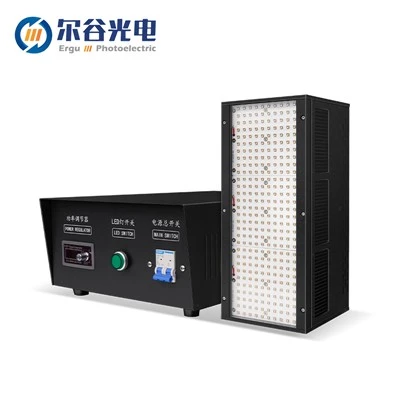
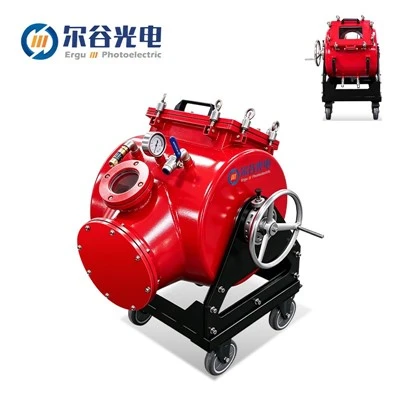
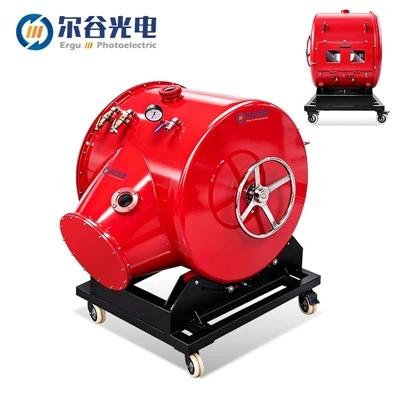
As a leading supplier of Excimer Equipment, I often encounter questions about the beam quality of our products. In this blog post, I'll delve into the concept of beam quality in excimer equipment, its significance, and how it impacts various applications.
Understanding Beam Quality
Beam quality is a critical parameter that describes the characteristics of a laser or light beam. In the context of excimer equipment, it refers to the properties of the ultraviolet (UV) light emitted by Excimer Lamps or integrated into Excimer Systems. A high - quality beam is essential for achieving consistent and precise results in a wide range of industrial, scientific, and medical applications.
There are several key factors that contribute to beam quality:
1. Beam Profile
The beam profile describes the distribution of light intensity across the cross - section of the beam. A Gaussian beam profile is often considered ideal, where the intensity is highest at the center of the beam and decreases symmetrically towards the edges. This type of profile allows for more uniform energy deposition on the target surface, which is crucial for applications such as photolithography and surface treatment.
In excimer equipment, achieving a well - defined beam profile requires careful design and optimization of the optical components. For example, the use of beam homogenizers can help to smooth out any irregularities in the beam intensity distribution, resulting in a more uniform and predictable output.
2. Beam Divergence
Beam divergence refers to the rate at which the beam spreads out as it propagates through space. A low - divergence beam is desirable because it can maintain its intensity over longer distances and focus to a smaller spot size. In excimer applications, such as micromachining and laser ablation, a small spot size is necessary for high - precision work.
The divergence of an excimer beam is influenced by factors such as the design of the laser cavity, the properties of the laser medium, and the quality of the optical components. By carefully controlling these factors, we can minimize beam divergence and improve the overall beam quality.
3. Beam Stability
Beam stability is another important aspect of beam quality. It refers to the consistency of the beam's properties over time, including its intensity, profile, and divergence. In industrial applications, where processes often run continuously for long periods, beam stability is crucial for ensuring consistent product quality.
Excimer equipment is designed with advanced control systems to maintain beam stability. These systems monitor the beam parameters in real - time and make adjustments as needed to compensate for any fluctuations. For example, feedback loops can be used to regulate the power supply to the laser, ensuring a constant output intensity.
Significance of Beam Quality in Different Applications
Industrial Applications
In the semiconductor industry, excimer lasers are widely used in photolithography to create patterns on silicon wafers. High - quality beams are essential for achieving the sub - micron resolution required for modern semiconductor manufacturing. A well - defined beam profile and low divergence ensure that the patterns are transferred accurately onto the wafer, resulting in higher yields and better - performing chips.


In the field of materials processing, excimer lasers are used for surface modification, such as cleaning, etching, and annealing. The quality of the beam directly affects the efficiency and precision of these processes. A uniform beam profile allows for consistent treatment across the entire surface, while low divergence enables precise control of the treatment area.
Medical Applications
In medical applications, excimer lasers are used for procedures such as refractive eye surgery and skin treatment. In refractive surgery, a high - quality beam is necessary to reshape the cornea with great precision, minimizing the risk of complications and improving visual outcomes.
For skin treatment, excimer lasers can be used to target specific skin conditions, such as psoriasis and vitiligo. The beam quality determines the effectiveness of the treatment, as a well - controlled beam can deliver the right amount of energy to the affected area without causing damage to the surrounding healthy tissue.
Scientific Research
In scientific research, excimer lasers are used in a variety of experiments, including spectroscopy and laser - induced breakdown spectroscopy (LIBS). High - quality beams are essential for obtaining accurate and reliable data. A stable beam with a well - defined profile and low divergence ensures that the measurements are consistent and reproducible.
How Our Excimer Equipment Ensures High Beam Quality
As a supplier of excimer equipment, we take several steps to ensure that our products deliver high - quality beams:
Advanced Optical Design
Our engineers use state - of - the - art optical design software to optimize the performance of the optical components in our excimer systems. This includes the design of the laser cavity, the selection of the appropriate lenses and mirrors, and the integration of beam - shaping elements.
Rigorous Quality Control
We have a comprehensive quality control process in place to test and verify the beam quality of each excimer system before it leaves our factory. This includes measuring the beam profile, divergence, and stability using advanced metrology equipment. Only systems that meet our strict quality standards are released for sale.
Continuous Innovation
We are committed to continuous innovation in excimer technology. Our research and development team is constantly exploring new ways to improve beam quality, such as the use of novel optical materials and advanced control algorithms. This allows us to stay at the forefront of the industry and provide our customers with the best - performing excimer equipment.
Contact Us for Procurement
If you are interested in learning more about our excimer equipment and how the high - quality beams can benefit your specific application, we encourage you to contact us. Our team of experts is ready to provide you with detailed information, technical support, and a customized solution tailored to your needs. Whether you are in the semiconductor industry, medical field, or scientific research, we have the right excimer equipment for you.
References
- Svelto, O. (2010). Principles of Lasers. Springer.
- Silfvast, W. T. (2004). Laser Fundamentals. Cambridge University Press.
- Ready, J. F. (1997). Effects of High - Power Laser Radiation. Academic Press.