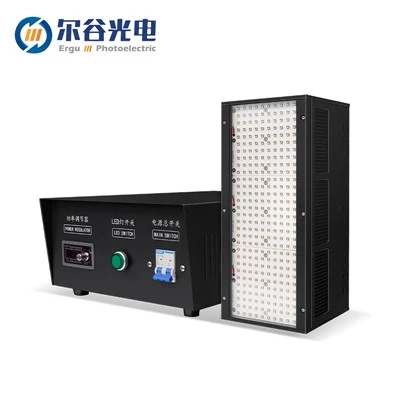
Handheld UV curing lamps are widely used in printing, electronics, and medical applications, and their performance directly impacts curing results. To ensure the stability and reliability of the equipment, they must be inspected according to standardized procedures, primarily covering visual inspection, electrical safety, UV radiation intensity, and curing performance evaluation.
1. Appearance and Structural Inspection
First, inspect the lamp housing for integrity, free of cracks, deformation, or poor sealing. Verify that buttons, connectors, and grips are not loose and that markings are clearly visible. Also, inspect the UV lamp surface for cleanliness, free of signs of aging, blackening, or damage, and ensure that the optical lens is free of scratches or contamination.
2. Electrical Safety Inspection
Use a multimeter to measure the input voltage to ensure it matches the device's nominal value and that the power adapter or battery is stable. Use a ground resistance tester to verify the device's insulation performance; leakage current should be below the safety threshold (typically ≤0.5mA). Perform a withstand voltage test on the high-voltage components to ensure there is no risk of short circuits or breakdown.
3. UV Radiation Intensity Test
Use a professional UV radiometer to measure the UV output intensity of the curing lamp at a standard distance (e.g., 10cm or 20cm). Record data separately for different wavelengths (e.g., UVA 365nm, UVB 313nm) to ensure that the actual intensity is within the manufacturer's calibration range (within ±10%). Avoid ambient light interference during testing, and average multiple measurements to improve accuracy.
4. Curing Verification
Select a standard curing material (e.g., UV adhesive or coating) and conduct actual curing tests at a set power and time. Observe the hardness, adhesion, and surface gloss of the cured material and compare the performance differences with the uncured sample. If necessary, use an infrared spectrometer to analyze the degree of crosslinking to ensure that the cure depth and uniformity meet the requirements.
5. Conclusion and Report
Based on all test data, determine whether the equipment meets the requirements. If insufficient intensity, electrical hazards, or abnormal curing are detected, identify the issue and recommend repair or replacement. Finally, a detailed inspection report is issued, including test conditions, results, and recommendations, providing a basis for equipment maintenance or purchase.
Through systematic testing, the performance and safety of handheld UV curing lamps can be effectively guaranteed, extending their service life and improving operational efficiency.