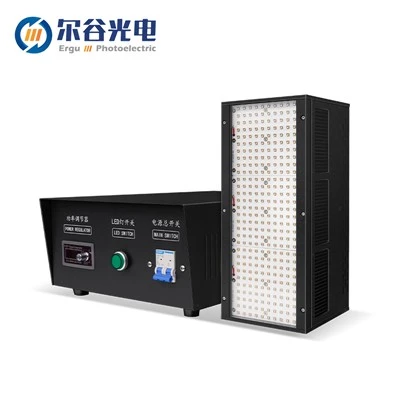
As a professional manufacturer of UV curing equipment, Ergu Photonics places the safety of people above all else in the pursuit of product performance and efficiency. A UV curing machine is a powerful industrial tool. Its associated hazards - ultraviolet radiation, high temperatures, and ozone - demand that every operator and maintenance worker approach it with full awareness and strictly adhere to a set of essential safety procedures.
1. First and Foremost: Guard Against UV Radiation Hazards
This is the most critical danger associated with UV equipment. Short-wave, high-energy ultraviolet light, particularly in the UVC and UVB bands, can cause severe photochemical damage to human skin and eyes.
Eye Protection: The cornea and lens of the eye absorb UV radiation very readily. Even brief exposure to reflected or scattered light can lead to photokeratitis (commonly known as "arc eye" or "welder's flash," with symptoms including intense pain, tearing, and light sensitivity that appear hours later). Long-term exposure can induce cataracts. During operation, looking directly at the light source or its reflection with the naked eye is strictly prohibited. Professional-grade UV-blocking goggles must be worn. Please note that ordinary sunglasses or green-tinted glass do not provide adequate protection. You should select professional eyewear clearly marked with UV400 protection or a specified wavelength transmittance curve.
Skin Protection: High-intensity UV light can burn exposed skin, causing redness, peeling, and pain similar to severe sunburn, and increases the long-term risk of skin cancer. Operators should wear long-sleeved work clothing, fasten collars, and wear UV-protective gloves to keep skin exposure to a minimum.
2. Management of Exhaust Gas and Ozone
During operation, a traditional mercury lamp curing machine emits deep UV light at wavelengths below 200nm, which reacts with oxygen in the air to produce ozone (O₃) with a distinctive fishy odor. While low concentrations of ozone can be germicidal, high concentrations strongly irritate the human respiratory tract, potentially causing coughing, chest tightness, and headaches. Therefore, mercury lamp equipment needs to be paired with an efficient and well-functioning exhaust system that vents the generated ozone and any trace substances released during curing directly outdoors. Care should be taken to ensure this exhausted air is not drawn back into the workshop by the air conditioning system. UV LED systems do not generate ozone, which is a significant safety advantage we often highlight.
3. Burns from High Temperatures and Electrical Safety
The lamp tube, reflector, and housing of a mercury lamp system reach extremely high temperatures during operation and for some time after shutdown. Before performing any maintenance or cleaning, the power must be disconnected and sufficient time allowed for the components to cool down. For high-power equipment, ensure that the power supply lines, circuit breakers, and grounding wire meet the equipment's rated requirements, and that grounding is reliable to prevent electrical leakage. Periodically inspect power cables for damage or aging, and keep the inside of the electrical cabinet clean and dry, preventing any ingress of moisture.
4. Safe Storage and Use of Materials
UV inks, adhesives, and cleaning agents often contain irritating reactive monomers or solvents. The work area should maintain good ventilation, and operators should wear appropriate chemical-resistant gloves and masks according to the material safety data sheets. Residual adhesive waste and contaminated cleaning cloths should be properly disposed of in designated hazardous waste collection containers.
At Ergu Optoelectronics we view every safety training session, every pair of intact protective goggles, and every effective exhaust system as a responsibility toward the well-being of you and your colleagues' families. We urge you to take these safety guidelines from the words on the wall and integrate them into every standardized action of your daily operation.