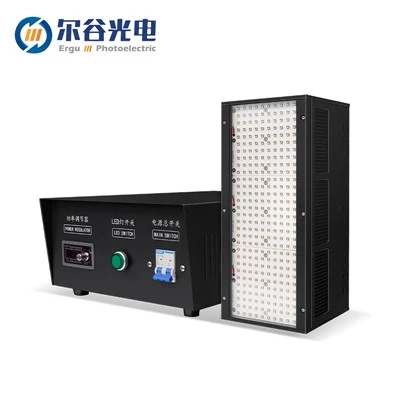
As industrial manufacturing upgrades toward higher precision and higher reliability, UV curing technology has long penetrated dozens of core fields, including semiconductor packaging, automotive components, electronics manufacturing, chemical reactions, and pipeline rehabilitation. However, for procurement teams, the UV equipment industry has always presented a practical challenge: manufacturers are a mixed bag, with small workshops doing OEM labeling, inflated specifications, and incomplete qualifications appearing frequently. At best, this causes production line yield fluctuations; at worst, it creates safety hazards and delays project delivery.
What exactly should you look at when choosing a UV equipment manufacturer? Price? Marketing hype? In the view of Dongguan Ergu Optoelectronics Technology Co., Ltd., a truly reliable supplier is never built through rhetoric, but layer by layer through years of accumulation, technical patents, authoritative certifications, and full-process control. As a source manufacturer deeply engaged in the UV optics field for nearly twenty years, Ergu Optoelectronics provides a reference answer for the industry with 36 patents, full ISO 9001 + CCC + CE certification, and full-process standardized management.
I. Nearly 20 Years of Industry Accumulation: Every Pitfall We've Encountered Becomes a Guide for Customers to Avoid Them
UV equipment is not a standard part; it is a systems engineering solution deeply tied to a customer's production process. A curing machine with seemingly similar specifications may perform vastly differently in actual use in terms of illumination uniformity, heat dissipation stability, and lifespan degradation – gaps that often require years or even more than a decade of industry refinement to close.
Since its founding in 2011, Ergu Optoelectronics has been rooted in the UV optics track. It started with traditional mercury lamp equipment, and today UV LED curing systems have become the mainstay. It has since expanded into explosion-proof and nitrogen-protection UV curing equipment for special environments, as well as chemical photochemical reaction equipment and trenchless rehabilitation systems for urban underground pipeline networks. These nearly twenty years have not been a smooth journey; they have been built through repeated debugging, iteration, learning from pitfalls, and optimization driven by the actual needs of hundreds of customer production lines.
The value of this accumulation is most perceptible to procurement teams: for the same customized UV curing solution, a novice manufacturer may need three to five rounds of trial and error, while Ergu Optoelectronics' engineers, backed by a process database accumulated over many years, can quickly match core parameters such as wavelength, power, irradiation distance, and heat dissipation scheme, reducing trial-and-error costs and project cycles. It is also this accumulation that has led leading enterprises across various fields – such as CSOT, Lens Technology, Chengli Automobile, Kesai Chemical, and BrosMed Medical – to choose long-term cooperation with Ergu Optoelectronics.
II. 36 Patents: Not Paper Honors, but the Technical Confidence to Solve Real Problems
Many procurement professionals have had similar experiences: a manufacturer claims to be "technologically leading," yet has few presentable patents and may even have copied its core structures. The number and quality of patents are among the more intuitive hard indicators for distinguishing a manufacturer's technical strength.
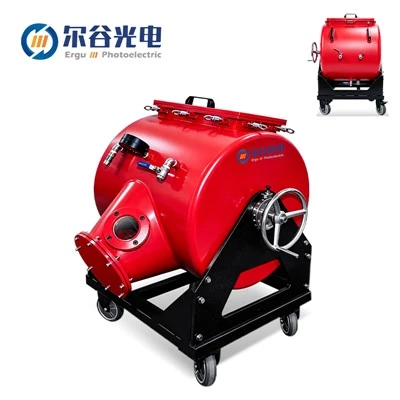
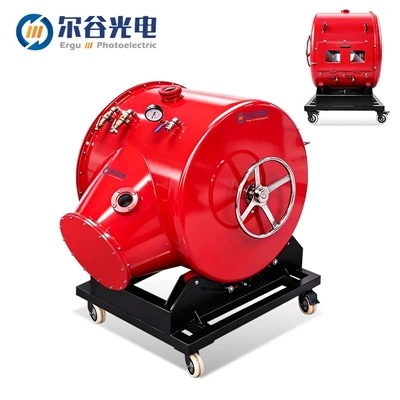
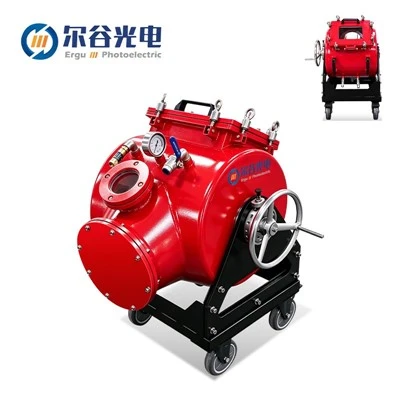
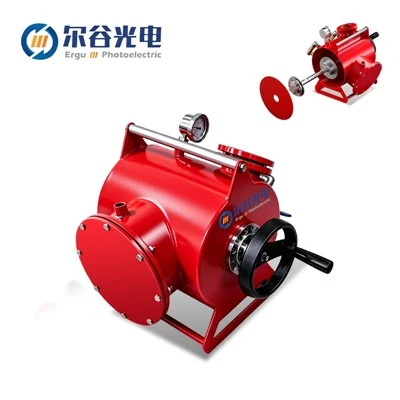
To date, Ergu Optoelectronics has accumulated 36 patents, covering multiple core areas such as light source structures, heat dissipation systems, optical design, equipment integration, and special-scenario applications. Notably, these patents are not design patents submitted merely to make up the numbers; many are utility model and invention patents derived from solving customers' real production challenges – for example, patents on air inversion equipment for underground pipeline rehabilitation scenarios, patents on explosion-proof curing structures for complex working conditions, and patents on uniform-illumination optical systems for high-precision electronics manufacturing.
Take a practical example: in semiconductor packaging, the uniformity of UV curing directly affects chip bonding strength and product yield. Ordinary equipment tends to produce high energy in the center and low energy at the edges. Through its independently developed patented optical lens array and multi-LED arrangement technology, Ergu Optoelectronics has increased the energy uniformity on the irradiation surface to over 90%, alleviating a long-standing industry pain point of uneven curing.
For procurement teams, the significance of 36 patents is not simply that "the manufacturer has technology." More importantly, it means the equipment has independent iteration capability, so there is no situation where "it is sold and then forgotten"; when special process requirements arise, the manufacturer can quickly develop customized solutions rather than only selling standardized finished products; and it fundamentally avoids intellectual property risks, reducing the possibility of customers becoming involved in patent disputes.
III. Full ISO 9001 + CCC + CE Certification: A Market Access Threshold and a Risk Firewall for Procurement
Many newcomers to procurement may think certifications are simply purchased certificates with little practical meaning. But anyone who has actually experienced production line accidents or customs clearance failures knows that authoritative certifications are, in essence, a risk firewall for the buyer.
Ergu Optoelectronics has passed ISO 9001 quality management system certification and holds CCC certification, CE certification, and explosion-proof-related qualifications. Each certification corresponds to tangible procurement value:
ISO 9001: This means that from raw material warehousing, production processing, and finished product inspection to after-sales maintenance, every link has a standardized control process. Work is not done based on workers' feel and experience; quality stability is guaranteed by the system.
CCC certification: This is the mandatory safety certification for the domestic market, covering core indicators such as electrical safety and electromagnetic compatibility. If equipment without CCC certification is put into production without authorization, the enterprise must bear corresponding responsibility once a safety accident occurs.
CE certification: This is the passport to the EU market. For enterprises with export business or serving foreign-funded customers, CE certification is a prerequisite for cooperation and internationally recognized proof of product safety and compliance.
The reason many low-price manufacturers can push prices down very low is precisely that they cut the cost of certification and quality control investment. Ergu Optoelectronics insists on full certification coverage, which in essence controls the safety risks, compliance risks, and delivery risks that buyers may encounter at the factory end in advance.
IV. Full-Process Standardized Management: Visible Dual Assurance of Quality and Delivery for Customers
The UV equipment industry has a common problem: samples are excellent, but batch delivery fails; small orders are delivered on time, but large orders are delayed. The root cause is the absence of a full-process standardized management system.
As a national high-tech enterprise and a provincial-level specialized, refined, distinctive, and innovative SME, Ergu Optoelectronics applies standardization throughout every stage from requirements alignment and solution design to manufacturing and inspection delivery.
Front end: Engineers conduct in-depth research at the customer's production line, output a detailed requirements assessment report and solution drawings, and only initiate the project after confirmation, reducing repeated modifications later.
Production: Core components are procured from designated sources; key processes have work instructions and inspection standards; and every unit must pass multiple quality checks before shipment, including a 72-hour continuous aging test, energy uniformity inspection, and safety performance testing.
Delivery: There is clear production cycle control and a logistics tracking system. Standard models are kept in stock, and customized models are advanced according to milestones, ensuring that customer project schedules are not affected.
After-sales: Installation and commissioning, operation training, regular inspections, and rapid-response repair services are provided, with full support throughout the equipment lifecycle.
For buyers, choosing such a manufacturer means not just buying a piece of equipment, but buying a stable solution and long-term technical backing. There is no need to worry about mid-project price increases, fear delivery delays, or struggle to find someone when problems arise – this is the core sense of security in supply chain procurement.
So, back to the original question: what should you really look for in a UV equipment manufacturer?
Track record: process know-how built through years of experience cannot be copied.
Patents: genuine technical depth cannot be faked.
Certifications: compliance and safety cannot be compromised.
Management: consistent quality and on-time delivery cannot be achieved by chance.
Nearly twenty years deeply engaged in UV optics, 36 patents, and a backing of full certifications and a full-process standardized system – this is the strength of Dongguan Ergu Optoelectronics Technology Co., Ltd., and the fundamental reason why more and more customers choose a source manufacturer. After all, in industrial procurement, reliability matters more than cheapness.