1.Why are special UV equipment needed? The difference between general and specialized type
Having deeply ploughed in the UV curing industry for many years, Ergu Optoelectronics has a profound understanding: Many customers still have a limited perception of UV equipment, believing that it merely consists of "light tubes plus housings", the difference lies only in power. In fact, when the application scenarios extend to specialized fields such as chemical engineering, precision manufacturing and semiconductors, general-purpose UV light curing equipment will soon encounter performance bottlenecks. This is where the value of specialized UV equipment lies - they are not "enhanced versions" of general equipment, but rather system solutions specifically designed to address the pain points of specific processes from scratch.
General UV equipment addresses the issue of "whether it can be cured", while special UV equipment tackles the problem of "whether it can be safely, efficiently and of high quality cured under specific conditions". How to ensure safety in an explosive and flammable environment? How to solve the problem of surface stickiness caused by oxygen inhibition? How to achieve molecular-level modification of the material surface? These are all questions that general equipment cannot answer.
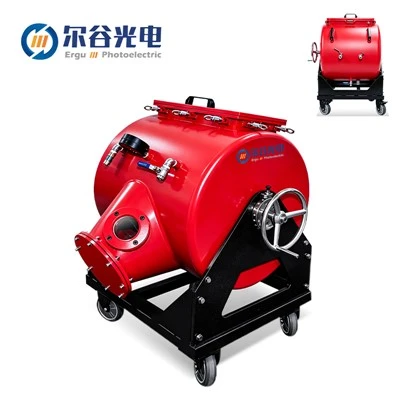
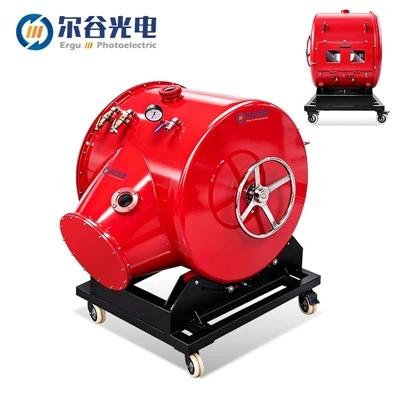
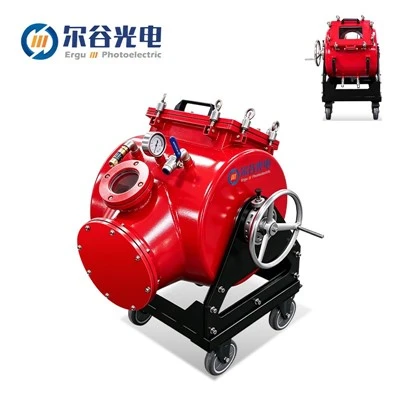
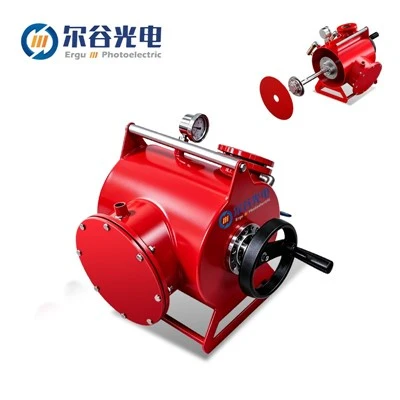
At present, the three representative types of special UV equipment in the market are: explosion-proof UV curing machines, nitrogen UV curing machines and excimer light processing systems. They correspond to the high-end demands of safety compliance, quality improvement and cutting-edge processes respectively. These technologies have high technical barriers and strong customer loyalty, making them the touchstones for the technical strength of UV equipment manufacturers. As a comprehensive manufacturer that masters all three technologies, Ergu Optoelectronics will today provide an in-depth analysis from three dimensions:technical principles, design difficulties and application scenarios.

2.Explosion-proof UV curing machine: The safety red line must not be crosse
The explosion-proof UV curing machine is a type of special equipment with extremely high safety and rigidity requirements. This is because it directly affects production safety. In industries such as coating, printing and chemical processing, there are often a large amount of flammable and explosive solvent vapors in the production environment, such as ethyl acetate, acetone and toluene. When these gases reach a certain concentration in the air, even a small electric spark or a local overheating can trigger an explosion accident.
Ordinary UV equipment obviously cannot be used in such an environment. The electric arc of the ballast, the contact sparks at the terminals, and the high temperature on the surface of the lamps all may serve as ignition sources. The core design goal of the explosion-proof UV curing machine is to fundamentally eliminate these dangerous factors and ensure that the equipment can operate safely even in hazardous areas.
Explosion-proof design is not simply about "making the housing thicker", but rather a complete system engineering. The first step is explosion-proof design, where all electrical components are encapsulated within a protective housing with sufficient strength. Even if an explosion occurs inside, the housing can withstand the pressure without cracking and will not ignite the explosive gases outside. The second step is enhanced safety design, where for components that do not generate arcs during normal operation, additional measures are taken to reduce temperature and improve insulation performance to eliminate the risks caused by faults. The third step is intrinsically safe design, which limits the energy of the circuit to a level that is insufficient to ignite the explosive mixture, eliminating the ignition capability at its source.
When evaluating the technical level of explosion-proof UV curing machines, several key indicators need to be considered. Firstly, the explosion-proof rating, whether it is Ex d IIB T4 or Ex d IIC T6, with higher numbers indicating a higher level and a wider range of applicable hazardous areas. Secondly, surface temperature control, the maximum temperature of the outer surface of the equipment must be lower than the ignition temperature of the corresponding gas, leaving sufficient safety margin. Thirdly, heat dissipation design, it is necessary to ensure the heat dissipation requirements for the normal operation of the lamp while not allowing the accumulation of heat to cause surface overheating. This is a balance that needs to be repeatedly optimized.
It is worth emphasizing that the explosion-proof certification is the lifeline of explosion-proof equipment. Any so-called "explosion-proof products" that have not been certified by an authoritative institution are essentially safety hazards. A regular explosion-proof UV curing machine must obtain the explosion-proof certificate issued by the National Explosion-proof Electrical Product Quality Supervision and Inspection Center. Each model must undergo a type test separately. The explosion-proof series products of Ergu Optoelectronics have all passed the regular certification. For customers in high-risk industries such as chemical and coating, choosing equipment with regular certification is not only a compliance requirement, but also a responsibility towards the safety of employees' lives.

3.Nitrogen UV curing machine: a quality tool for overcoming oxygen inhibition
If the explosion-proof UV curing machine addresses the safety issue, then the nitrogen UV curing machine tackles the quality issue. During the process of serving customers, Ergu Optoelectronics has discovered that many enterprises often encounter a troublesome problem: the coating surface becomes sticky, has poor wear resistance, has uneven gloss, and the underlying layer has dried out but the surface remains sticky. This is the well-known oxygen inhibition effect in the UV curing industry.
The principle of oxygen inhibition is not complicated. UV curing is essentially a free radical polymerization reaction, and oxygen molecules will combine with the free radicals to form less reactive peroxide free radicals, thereby consuming the free radicals on the surface and causing incomplete surface curing. This problem becomes more obvious when the coating is thinner and the concentration of the photoinitiator is lower. For ordinary industrial coating applications, it may not have a significant impact, but in high-end optical, electronic, and printing fields, even minor surface defects are unacceptable.
There are many methods to solve oxygen inhibition: increasing the amount of photoinitiator, enhancing UV energy, and using surface additives. However, these methods have limited effects and may also cause side effects. A more thorough solution is to create an oxygen-free environment in the curing area - this is the core principle of the nitrogen UV curing machine. By continuously introducing high-purity nitrogen gas into the curing chamber, oxygen is replaced, allowing the curing reaction to take place in an inert gas atmosphere, thereby effectively eliminating oxygen inhibition.
The technical difficulties of the nitrogen UV curing machine do not lie in supplying nitrogen gas itself, but in how to supply nitrogen gas efficiently, uniformly and economically. Firstly, it involves the design of the flow field: How should the nitrogen gas be distributed after entering the chamber to form a stable low-oxygen environment throughout the irradiation area and avoid dead corners and vortices? Secondly, it concerns the sealing design: How to reduce nitrogen gas leakage at the chamber opening and lower the nitrogen consumption, which directly affects the user's usage cost. Thirdly, it involves monitoring and control: Real-time monitoring of the oxygen content inside the chamber is necessary to ensure the consistency of the curing effect.
The effect of nitrogen UV curing has been significantly enhanced. Under the same energy conditions, the coating surface in a nitrogen environment is more fully cured, with the surface hardness increasing by more than 30%, higher gloss, and significantly improved wear resistance and scratch resistance. For industries such as screen printing, offset printing, optical films, and precision coating that have high requirements for surface quality, nitrogen UV curing has become very common. Of course, nitrogen protection will also increase the usage cost. Enterprises need to comprehensively evaluate the input-output ratio based on the quality requirements and added value of the products. Ergu Optoelectronics will objectively analyze the cost-benefit when making solutions for customers and provide suitable suggestions.
A common misconception is that only mercury lamps require nitrogen protection, while UVLEDs do not. In fact, UVLED curing systems also have the problem of oxygen inhibition, especially when curing thin coatings with long-wave LEDs (such as 395nm and 405nm), where the phenomenon of surface stickiness also occurs. High-end UVLED curing lines will also be equipped with nitrogen protection devices to achieve better surface curing effects.

4. Excimer light processing system: a cutting-edge technology for molecular-level surface modification
If the explosion-proof and nitrogen UV equipment is still optimizing within the framework of curing, then the excimer light processing system has already transcended the traditional concept of curing and entered a brand-new field of material surface modification. This is a more cutting-edge and technologically advanced UV application technology, and it is also the future direction that Ergu Optoelectronics is focusing on.
An excimer lamp is a special type of vacuum UV light source that can emit UV light with specific wavelengths such as 172nm and 222nm. These short-wavelength photons have extremely high energy, reaching up to 6-7 eV, which is sufficient to directly break the chemical bonds of most organic materials. When excimer light is shone onto the material surface,a series of complex photochemical reactions occur:molecular chain breakage,introduction of polar groups,surface cross-linking,and minor etching... Ultimately, the surface properties of the material can be precisely controlled.
The application of excimer light treatment is very extensive. The most common applications are surface cleaning and activation. The surfaces of materials such as plastics, rubbers, and metals often have a weak boundary layer or organic contaminants, which result in poor adhesion during printing, bonding, and coating. By exposing them to excimer light for tens of seconds, the surface contaminants can be effectively removed, and at the same time, polar groups such as hydroxyl and carboxyl can be introduced, significantly increasing the surface energy and thus greatly enhancing the adhesion. This process is increasingly being used in pre-treatment before printing, bonding, and spraying.
Another important application is surface modification. By controlling the wavelength, dosage and processing atmosphere of the excimer light, the surface properties of the material can be directionally altered. For instance, making a hydrophobic surface hydrophilic, or vice versa; increasing the surface hardness and wear resistance; improving biocompatibility; and preparing surface micro-nano structures, etc. Compared with plasma treatment, excimer light treatment can be carried out under normal pressure, with a simpler equipment structure, better processing uniformity, and without causing damage to the material due to ion bombardment.
The technical requirements for the excimer light processing system are extremely high. Firstly, the manufacturing technology of the excimer lamp itself. Currently, high-end excimer lamps are still mainly imported, and domestic alternatives are accelerating their development. Secondly, the control of the chamber and gas. The 172nm vacuum ultraviolet light is strongly absorbed by air, so nitrogen or other inert gases need to be filled in the processing chamber, and the optical windows also need to be made of special synthetic quartz materials. Thirdly, the process control. The surface treatment effect is closely related to parameters such as light intensity, distance, speed, and atmosphere, and it requires rich process experience to achieve the ideal effect.
In the fields of semiconductors, display panels, medical devices, and high-end printing, excimer light processing is becoming a new standard process. With the maturity of domestic excimer lamp technology and the reduction in equipment costs, this cutting-edge technology is moving from the laboratory to large-scale industrial applications, and the market potential is highly anticipated. Ergu Optoelectronics is also continuously investing in research and development to promote the domestication and industrialization of excimer light processing technology.
5.The three core principles for selecting special equipment
Based on the years of experience in serving customers accumulated by Ergu Optoelectronics, the enterprises should adhere to three core principles when they select special UV equipment.
The first principle is scene matching priority. Do not blindly pursue high-end equipment, instead, first clearly identify your core pain points. If the production environment contains flammable and explosive solvents, safety comes first. An explosion-proof UV curing machine should be the top choice. If the surface quality of the product requires high standards, oxygen inhibition is the main issue, so consider a nitrogen UV curing machine. If there are problems such as poor adhesion and low surface energy, an excimer light treatment system might be the solution. Choosing the wrong direction, even the most expensive equipment will not be able to solve the problem.
The second point is system capability is greater than that of a single component. Special UV equipment is not a standard product but a system-integrated product. The same lamp tube may have different structural designs, cooling solutions and control logic, resulting in vastly different final effects. When evaluating the strength of a manufacturer, do not only look at which brand of lamp tube is used, but also consider its overall design capability, process understanding ability and project experience. Manufacturers with 36 patents accumulated, ISO9001 certification and multiple industry application cases are usually more trustworthy.
The third aspect is consideration of the entire life cycle cost. The purchase cost of special equipment is usually higher than that of general equipment, but one should not only focus on the initial investment. Explosion-proof equipment avoids the risk of safety accidents, nitrogen equipment improves product yield, and excimer equipment brings about process upgrades. All of these will generate returns over the long term. One needs to comprehensively consider factors such as purchase cost, operation cost, maintenance cost, efficiency improvement and quality enhancement, and calculate the input-output ratio of the entire life cycle.
6.The development trend of special UV curing equipment
Looking ahead, the development of special UV equipment has three clear directions. Firstly, it will become more intelligent, with more sensors being incorporated into the equipment to achieve real-time monitoring and closed-loop control of parameters such as temperature, pressure, oxygen content and UV energy, making the equipment operation more stable and enabling traceability of process data. Secondly, it will be more integrated, integrating multiple functions into one device, for example, integrating nitrogen protection function into the UVLED curing system, or integrating the surface treatment function of excimer lamps before curing, simplifying the customer's production line. Thirdly, it will be more customized, developing dedicated models specifically for the specific needs of certain industries, rather than modifying general models.
Special equipment constitutes a technological moat and a high-profit area for UV equipment manufacturers. Only those manufacturers that can master core technologies such as explosion-proof, nitrogen and excimer, and possess the ability for customized development, can gain an advantageous position in the increasingly fierce market competition. Ergu Optoelectronics, as a comprehensive manufacturer that masters these three core technologies, will continue to deeply focus on the field of specialized equipment and provide more professional and reliable solutions for customers in various industries. For manufacturing enterprises, making good use of specialized UV equipment is also an important means to improve product quality and enhance process competitiveness.