How does the intensity of UV Ink Curing Lamp affect the curing process?
As a supplier of UV Ink Curing Lamps, I've witnessed firsthand the critical role that lamp intensity plays in the UV curing process. UV curing is a technology that uses ultraviolet light to instantly dry or cure inks, coatings, and adhesives. This process has revolutionized industries such as printing, packaging, and electronics manufacturing, offering benefits like high - speed production, energy efficiency, and environmental friendliness. In this blog, I'll delve into how the intensity of a UV Ink Curing Lamp impacts the curing process.
Understanding UV Ink Curing
Before we explore the impact of lamp intensity, it's essential to understand the basics of UV ink curing. UV inks contain photoinitiators, which are molecules that absorb UV light. When exposed to UV light of the appropriate wavelength and intensity, these photoinitiators break down into free radicals. These free radicals then initiate a chemical reaction called polymerization, which causes the ink to harden and adhere to the substrate.
The curing process involves three main steps: initiation, propagation, and termination. During the initiation phase, the photoinitiators absorb UV light and generate free radicals. In the propagation step, these free radicals react with the monomers and oligomers in the ink, forming long - chain polymers. Finally, in the termination phase, the free radicals combine, ending the polymerization reaction.
Impact of Lamp Intensity on Initiation
The intensity of the UV Ink Curing Lamp has a direct impact on the initiation step of the curing process. Higher lamp intensity means more UV photons are available to be absorbed by the photoinitiators. As a result, more photoinitiators break down into free radicals, accelerating the start of the polymerization reaction.
When the lamp intensity is too low, there may not be enough free radicals generated to initiate the reaction effectively. This can lead to incomplete curing, where the ink remains tacky or doesn't fully adhere to the substrate. For example, in a printing application, low - intensity curing can cause the printed image to smudge or scratch easily, reducing the quality of the final product.
On the other hand, extremely high lamp intensity during the initiation phase can also cause problems. It can lead to a very rapid generation of free radicals, which may result in a highly exothermic reaction. This sudden release of heat can cause the ink to bubble or crack, especially on heat - sensitive substrates.
Influence on Propagation
During the propagation step, the free radicals react with the monomers and oligomers in the ink to form polymers. The lamp intensity affects the rate at which this reaction occurs. A higher - intensity lamp provides more energy to the reaction, allowing the free radicals to react more quickly with the monomers. This leads to a faster propagation rate and shorter curing times.
In high - speed printing operations, a high - intensity UV Ink Curing Lamp is crucial. For instance, in a flexographic printing press that runs at high speeds, a lamp with sufficient intensity is needed to cure the ink before the printed material moves out of the curing area. If the lamp intensity is too low, the propagation reaction will be slow, and the ink may not fully cure in time, causing issues such as set - off (ink transferring to the back of the next sheet) or poor print quality.
However, an overly intense lamp can cause the polymers to form too quickly. This can result in a highly cross - linked and brittle polymer network. In applications where flexibility is required, such as in some packaging materials, this can be a significant drawback.


Effects on Termination
The termination step of the curing process is also influenced by the lamp intensity. In a well - balanced curing process, the free radicals eventually combine to end the polymerization reaction. A proper lamp intensity ensures that the reaction reaches a natural termination point, resulting in a stable and fully cured ink.
If the lamp intensity is too low, the free radicals may persist for a longer time, and the reaction may not terminate properly. This can lead to post - curing effects, where the ink continues to harden over time, which may cause dimensional changes in the printed material.
Conversely, a very high - intensity lamp can cause the free radicals to combine too quickly. This can lead to an incomplete polymerization reaction, as some of the monomers and oligomers may not have had enough time to react. As a result, the cured ink may have reduced mechanical properties, such as lower adhesion and abrasion resistance.
Practical Considerations for Selecting Lamp Intensity
When selecting a UV Ink Curing Lamp, several factors need to be considered to determine the appropriate intensity. The type of ink being used is a critical factor. Different inks have different photoinitiator systems and require different amounts of UV energy to cure. For example, some inks are formulated to be cured with low - intensity lamps, while others are designed for high - intensity curing.
The substrate also plays a role. Heat - sensitive substrates, such as plastics or thin papers, may require a lower - intensity lamp to prevent damage. On the other hand, materials like metal or glass can withstand higher - intensity lamps.
The speed of the production line is another important consideration. Faster production lines generally require higher - intensity lamps to ensure that the ink cures in time. For example, in a digital printing press that operates at high speeds, a high - intensity UV Ink Curing Lamp is necessary to keep up with the production rate.
Our Product Offerings
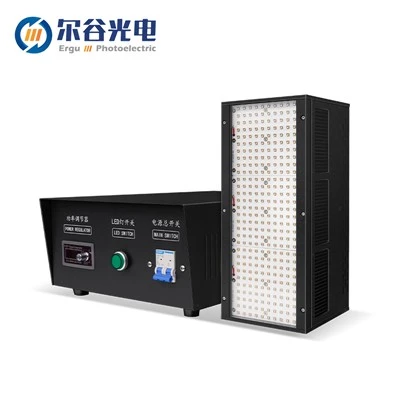
As a supplier of UV Ink Curing Lamps, we offer a wide range of products with different intensities to meet the diverse needs of our customers. Our lamps are designed to provide consistent and reliable performance, ensuring optimal curing results. Whether you need a UV Glue Curing Lamp for bonding applications or a UV Light Curing Lamp for general curing purposes, we have the right solution for you.
If you're looking to improve the quality and efficiency of your UV curing process, it's essential to choose the right lamp intensity. Our team of experts can help you select the most suitable UV Ink Curing Lamp for your specific application. We understand that every customer's needs are unique, and we're committed to providing personalized solutions.
Contact Us for Procurement
If you're interested in learning more about our UV Ink Curing Lamps or would like to discuss your specific requirements, we encourage you to get in touch with us. Our sales team is ready to assist you with any questions you may have and guide you through the procurement process. Whether you're a small - scale printer or a large - scale manufacturing company, we have the products and expertise to meet your needs.
References
- “UV Curing Technology: Principles and Applications” by Dr. John W. Baur.
- “Handbook of UV and EB Formulations for Coatings, Inks, and Paints” edited by Dr. Brian P. Stark.
- Industry research reports on UV curing technology from leading market research firms.