Hey there! As a supplier of Light Curing Machines, I often get asked about the curing consistency of these nifty devices. So, let's dive right in and break down what curing consistency in a light curing machine really means.
First off, what's light curing? Well, it's a process where a special light source, usually in the UV or visible light spectrum, is used to harden or cure certain materials like adhesives, coatings, and composites. The light triggers a chemical reaction in these materials, causing them to go from a liquid or semi - liquid state to a solid one. And that's where the light curing machine comes in.
Now, curing consistency refers to how evenly and predictably a light curing machine can cure materials across different areas of the workpiece and over multiple curing cycles. In other words, you want the same level of hardness and quality of the cured material every time, no matter where on the part it's being cured.
There are a few key factors that influence the curing consistency of a light curing machine.
Light Intensity
Light intensity is super important. It's measured in units like milliwatts per square centimeter (mW/cm²). If the light intensity is too low, the material might not cure properly, remaining sticky or soft in some areas. On the other hand, if it's too high, it could cause over - curing, which might lead to cracking or brittleness in the cured material.
For example, let's say you're using a Light Curing Machine to cure a coating on a plastic part. If the light intensity varies across the surface of the part, you'll end up with some spots that are well - cured and others that aren't. That's a big no - no when you're looking for consistency.
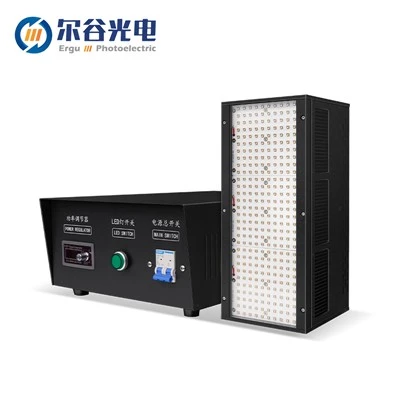
Our LED Light Curing Machine is designed to provide a uniform light intensity across the curing area. We use advanced LED technology that can be precisely controlled to ensure that the light intensity remains stable during the entire curing process. This way, you can be confident that the material will be cured evenly every time.
Wavelength
The wavelength of the light used in the curing process also plays a crucial role. Different materials are sensitive to different wavelengths of light. For instance, some adhesives might cure best under a specific UV wavelength, while others might respond better to visible light.
A good light curing machine should be able to emit light at the right wavelength for the material you're working with. Our High Power UV Curing LED System offers a range of selectable wavelengths, allowing you to customize the curing process according to your specific needs. This flexibility helps to ensure that you get consistent curing results, no matter what type of material you're using.
Exposure Time
Exposure time is another factor that affects curing consistency. The material needs to be exposed to the light for the right amount of time to fully cure. If the exposure time is too short, the material won't cure completely. If it's too long, it can lead to over - curing.
Most modern light curing machines, like the ones we supply, come with programmable exposure times. You can set the machine to expose the material to the light for the exact amount of time required for optimal curing. This feature helps to eliminate human error and ensures that each curing cycle is consistent.
Temperature and Environmental Conditions
The temperature and environmental conditions can also have an impact on curing consistency. Higher temperatures can speed up the curing process, while lower temperatures can slow it down. Humidity can also affect the way the material cures.
Our light curing machines are designed to be as insensitive to environmental conditions as possible. However, it's still a good idea to keep the working environment at a relatively stable temperature and humidity level for the best results.
Maintenance and Calibration
Regular maintenance and calibration of the light curing machine are essential for maintaining curing consistency. Over time, the light source can degrade, and the machine's components can wear out. This can lead to changes in light intensity, wavelength, and other parameters.
We recommend that you follow our maintenance schedule and have the machine calibrated regularly. This will help to ensure that the machine continues to perform at its best and provide consistent curing results over its lifespan.
So, why is curing consistency so important? Well, in industries like manufacturing, electronics, and automotive, where precision and quality are key, consistent curing is essential. It ensures that the products meet the required standards and specifications. For example, in the production of printed circuit boards, inconsistent curing of the solder mask can lead to short circuits or other electrical problems.


As a supplier of light curing machines, we understand the importance of curing consistency. That's why we've put so much effort into designing and manufacturing machines that can provide reliable and consistent curing results. Whether you're a small - scale workshop or a large - scale industrial manufacturer, our light curing machines can help you achieve the level of quality and consistency you need.
If you're interested in learning more about our light curing machines or have any questions about curing consistency, don't hesitate to get in touch. We're here to help you find the right solution for your specific needs and ensure that you get the best possible results from your light curing process. Let's work together to take your production to the next level!
References
- "Handbook of Photochemistry and Photobiology"
- "UV Curing: Science and Technology"