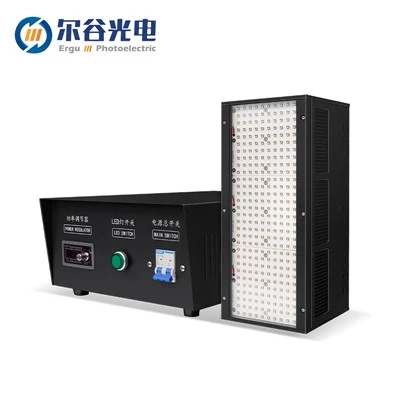
Many companies tend to go to one of two extremes when purchasing UV curing equipment. One extreme is focusing solely on the purchase price – buying the cheapest option available, only to end up with poor curing results and frequent breakdowns that keep the production line stopping every few days, ultimately costing more in the long run. The other extreme is believing that "higher power is always better" and "more features mean more capable," stretching the budget to buy a top-of-the-line configuration, only to find that most of the functions are never used and the money is wasted.

   In reality, there is no absolute good or bad when it comes to UV curing equipment – the key is whether it fits your needs. Ergu Optoelectronics has worked in the UV optics field for nearly two decades and has encountered a wide variety of customers and processes. We have compiled a practical selection guide to help you start from your real needs, avoid common pitfalls, and choose equipment that truly fits your production line.
Before selection, clarify these five questions first
Choosing equipment is like buying shoes – measure your own feet first, otherwise no matter how expensive the shoes are, they will be uncomfortable. By sorting out your needs from these five dimensions, you can avoid 80% of the common selection pitfalls.
First: Substrate characteristics and workpiece geometry.
First look at what material and shape your workpieces are. Heat-resistant materials like metals and wood are relatively forgiving; but if you are working with heat-sensitive materials such as electronic components or thin plastic parts that are highly sensitive to temperature rise, high-temperature mercury lamps can easily cause deformation or yellowing, making a low-temperature LED solution more suitable. Also, is the workpiece flat or three-dimensional with irregular shapes? This directly determines how the light source should be arranged.
Second: Process cycle time and production mode.
Are you engaged in low-volume, high-mix intermittent production, or continuous mass production on an assembly line that never stops? What is the line speed and production capacity target? Continuous mass production requires sufficient power, and you also need to consider whether the equipment can interface with the existing production line. Low-volume, high-mix production places more emphasis on whether the equipment parameters can be adjusted easily and whether changeover is fast when switching products.
Third: Curing chemistry system.
This is the most critical technical basis for selection – what is the absorption peak wavelength of the photoinitiator in your UV adhesive, ink, or coating? Common wavelengths include 365 nm, 395 nm, and 405 nm. Only when the light source wavelength matches the absorption peak can the reaction proceed efficiently; if the wavelength is mismatched, no matter how high the power, it will be useless. If the coating is thick or the pigment color is dark, you also need to consider whether the curing depth is sufficient.
Fourth: On-site safety and environmental requirements.
Are there flammable or explosive organic solvents at the production site? Is it classified as a hazardous area? What is the required cleanliness level? In scenarios such as chemical processing, spray painting, and gravure printing, equipment with the corresponding explosion-proof rating must be selected. For medical and semiconductor cleanrooms, the equipment must be dust-free, have low ozone emission, and comply with clean production standards. Safety compliance is a red line where no shortcuts should be taken.
Fifth: Full life-cycle budget.
When purchasing equipment, you cannot only look at the purchase price; you must also account for long-term costs – operation and maintenance costs, consumable replacement, and electricity consumption. Together, these constitute the true total cost. UV LED equipment has a higher purchase price, but the light source has a long lifespan, low energy consumption, and does not require frequent lamp replacement, making it more economical in the long run for continuous use. Traditional mercury lamps have a lower purchase price, but the lamps are consumables that need to be replaced periodically, and overall energy consumption is higher. Calculate based on your usage frequency to determine which is more cost-effective
Three categories of mainstream equipment: What scenarios are they suitable for?
Once your needs are clear, you can match them to specific equipment types. The following three groups are the most common decision points in the industry, each with its own applicable scenarios – no single option absolutely replaces another.

Group 1: UV LED curing systems vs. traditional mercury lamp curing equipment

   UV LED is a cold light source with low infrared radiation, resulting in minimal substrate temperature rise during curing, making it especially suitable for heat-sensitive materials and precision electronic components. LEDs are also instant-on, fast-responding, long-lived, and energy-efficient, making them convenient for continuous mass production lines. The advantage of traditional mercury lamps lies in their broad spectral coverage and high peak energy, which delivers better deep-curing performance for thick coatings, dark-colored coatings, and complex ink systems. They also have lower equipment acquisition costs, making them suitable for production scenarios that are not temperature-sensitive and have limited budgets. Some complex processes even use a combination of LED and mercury lamp solutions – LED for surface setting and mercury lamp for deep curing, gaining the advantages of both.

Group 2: Explosion-proof UV curing machines vs. conventional non-explosion-proof equipment

   Conventional non-explosion-proof equipment is suitable for ordinary scenarios without flammable or explosive risks, such as electronic assembly, building material coating, and packaging printing, offering simple structure and controllable costs. Explosion-proof equipment is specifically designed for hazardous environments with explosive gases, such as chemical processing, spray painting, and printing. The overall structure follows the GB 3836 series explosion-proof standards, with special designs from electrical flameproof structures to sealing protection, meeting safety production compliance requirements for high-risk scenarios. The selection principle is simple: safety first – do not lower the explosion-proof rating to save money.

Group 3: Nitrogen UV curing systems vs. ambient air curing equipment

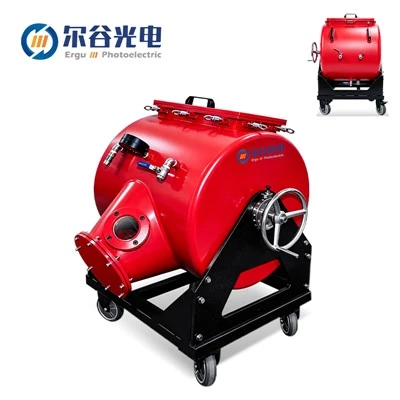
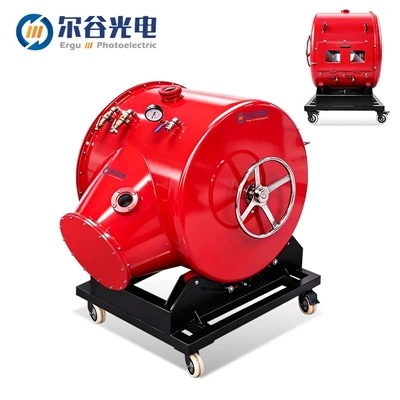
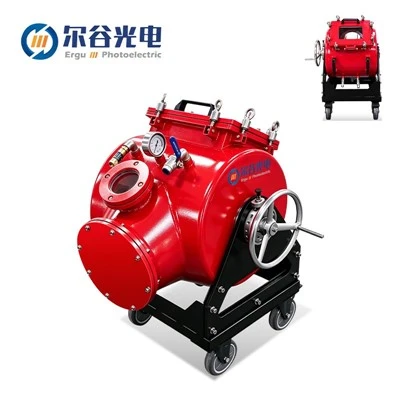
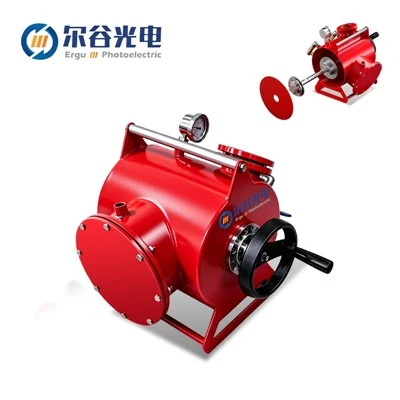
   Ambient air curing is the choice for most conventional scenarios. The equipment is simple, has no additional operating costs, and meets basic curing needs without issue. Nitrogen-protected curing systems create a low-oxygen environment in the curing zone, addressing from the root cause the problems of tacky coating surfaces, insufficient hardness, and poor scratch resistance caused by oxygen inhibition. They can significantly improve surface quality, crosslink density, and chemical resistance, making them suitable for high-end automotive parts, precision optical components, and premium printing where surface quality requirements are high. However, nitrogen systems require continuous nitrogen consumption and higher operating costs, so they should be weighed against the product's quality requirements and added value.

The value of customized equipment: Let the equipment adapt to the production line, not force the production line to accommodate the equipment

   In actual production, standardized equipment often struggles to perfectly match an enterprise's individualized needs – production line heights may be unusual, workpiece shapes complex, workshop space limited, etc. If standard equipment is forced into use, it is often necessary to modify the existing production line to accommodate the equipment parameters – the so-called "cutting the foot to fit the shoe" – which not only increases modification costs but may also affect overall production efficiency.

   The core value of customized UV equipment is to center on the customer's actual working conditions and process requirements, designing everything from equipment dimensions, light source arrangement, and conveying method to control logic according to need – the equipment adapts to the production line, rather than the production line adapting to the equipment. As a comprehensive manufacturer deeply engaged in the UV optics field for fifteen years, Ergu Optoelectronics possesses a full-category UV curing product matrix and mature customization capabilities. With 36 patent technology accumulations and an ISO 9001 full-process quality management system, we can deliver everything from simple dimensional adaptation to complex multi-station, multi-angle curing systems.

Our selection principle: Recommend the most suitable, not the most expensive

   In our interactions with customers, we always adhere to one principle: we do not recommend higher configurations just to sell at a higher price; we only recommend solutions that truly fit the customer's needs.

   To make selection evidence-based, we provide free process validation services. Customers can send workpieces and curing materials to our laboratory, and we will match the corresponding wavelength and power equipment for sampling tests, measuring key parameters such as actual curing effect, substrate temperature rise, and curing speed – using real data rather than guesswork. If a basic model can meet the requirements, we will never recommend a higher-configuration model. If standard equipment is truly unsuitable, we will then offer a customized solution.

   At the same time, we help customers calculate full life-cycle costs, analyzing the input-output ratio of different configurations based on production capacity and usage frequency, so that every penny is spent with clear justification and no money is wasted on unused features.

   For manufacturing enterprises, choosing the right UV curing equipment can improve efficiency and quality while avoiding unnecessary cost waste. As practitioners in the UV industry, we always believe that promoting rational equipment selection and matching the right equipment to the right process is the foundation for the healthy development of the industry and our responsibility as well. In the future, Ergu Optoelectronics will continue to start from customer needs, using reliable products and professional services to help more enterprises select UV curing solutions that truly fit.