Why are more and more companies willing to pay a premium for custom UV equipment? Because the process pain points that standard machines cannot solve are your true competitive barriers. This article, drawing on Ergu Optoelectronics' 36 patents and its industry-university-research collaboration experience, thoroughly explains the real value of customized services and the fundamental logic shift in the UV industry from "selling equipment" to "selling solutions."
I. Why Has Customization Become the Core Competitiveness of the UV Industry?
Having worked in the UV equipment field for so many years, Ergu Optoelectronics has a distinct observation: the industry is undergoing a profound transformation. A decade ago, customers buying equipment would ask, "What models do you have?" Now, customers open with, "We have this specific process – can you do it?" This shift in questioning reflects a transformation of the entire industry – from selling products to selling solutions, from standardization to customization.
The main driver behind this shift is the upgrading of downstream manufacturing. When Chinese manufacturing was still doing low-end contract work, general-purpose UV curing equipment could meet demand, and competition was all about who was cheaper. But now, as various industries move upmarket, product differentiation is growing, process requirements are becoming increasingly refined, and standard equipment finds it harder to directly fit customers' production lines and processes. Semiconductor packaging demands specialized spot sizes, automotive components require specific chamber structures, chemical reactions need unique explosion-proof and anti-corrosion designs, and pipeline rehabilitation calls for specialized mobile operation methods... Every niche scenario has its own unique requirements.
Customization capability is becoming the core competitiveness of UV equipment manufacturers. Those who can only sell standard machines will see their profit margins thinner and thinner, eventually trapped in a red ocean of price wars. In contrast, manufacturers who can deeply understand customers' processes and provide customized total solutions can enter the high-value-added blue ocean market. Ergu Optoelectronics has continuously increased its investment in customization business precisely because it recognized this trend. Drawing on our practical experience, this article discusses the value of customized services, the pathways to achieve them, and the collaborative innovation model between industry, academia, and research.
II. Customization Is Not "Resizing": What True Solution Capability Really Means
Many people understand customization as simple modifications like "making the irradiation area a bit larger" or "extending the machine body a little." That is merely adjusting physical dimensions – it does not qualify as a complete custom solution. In Ergu Optoelectronics' view, customization means starting from a customer's process pain points, redesigning the optical, mechanical, electrical, and control systems to deliver a complete solution.
A full-scale custom project typically goes through several stages. The first is requirements investigation – not simply doing what the customer asks, but going deep into the customer's production site to understand the real process conditions, line cycle times, quality requirements, and environmental factors, uncovering deep-seated needs that the customer may not even be aware of themselves. The second stage is solution design, where the optical, thermal, structural, and control schemes are determined based on the requirements, followed by simulation calculations and feasibility verification. The third stage is prototype fabrication and testing – after building a prototype, process trials are carried out at the customer's site, and iterative optimization is conducted based on actual results. The final stage is batch delivery and subsequent service.
Take UV photochemical reaction systems in the chemical industry as an example – these are typical deep-customization products. Different chemical reactions require different wavelengths; reaction vessels vary in shape and size; the corrosiveness of materials differs; and explosion-proof rating requirements are not the same. No single standard reaction equipment can cover all processes. A professional manufacturer will design a dedicated reactor structure, light source arrangement, temperature control system, and explosion-proof scheme based on the customer's specific reaction system, ensuring higher light utilization efficiency, better reaction outcomes, and compliance with safety ratings. Such a customization project, from initial communication to final delivery, may undergo many months of repeated refinement and ultimately tests the manufacturer's comprehensive technical strength.
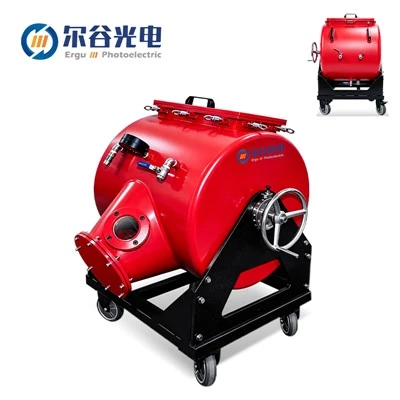
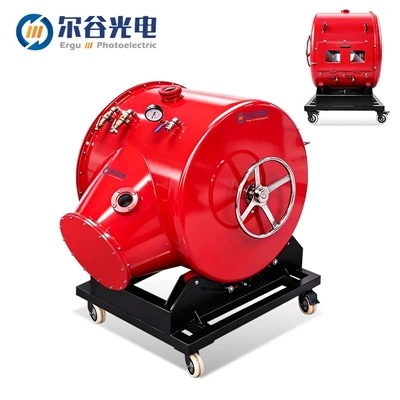
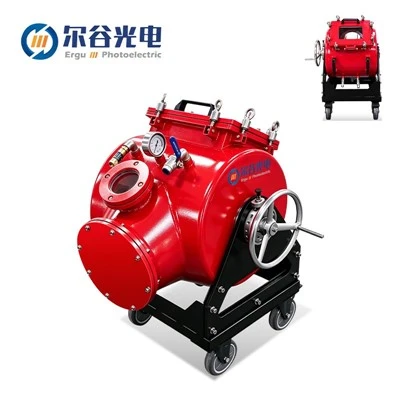
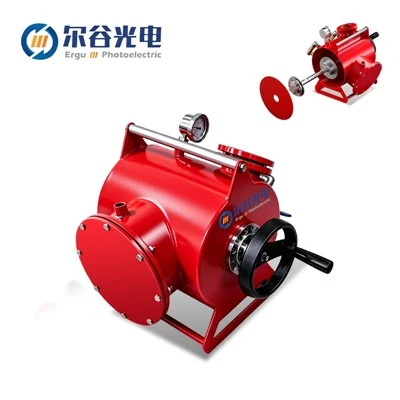
Another example is the trenchless rehabilitation field. The trenchless rehabilitation UV curing systems and CIPP air inversion drums are all purpose-built specialized equipment for the unique scenario of pipeline rehabilitation. Pipes have different diameters, different materials, and different construction environments. Correspondingly, the light chain structure, power distribution, and inversion drum parameters must all be adjusted. A truly knowledgeable manufacturer does not just sell a piece of equipment to the customer and consider the job done; instead, they will provide a complete equipment configuration recommendation based on the customer's common construction scenarios, and even participate in the optimization of the construction process.
Providing solutions free of charge may sound simple, but execution is not easy. It requires the manufacturer to possess deep UV technical expertise, profound understanding of downstream industry processes, and a rapidly responsive R&D and production system. Many smaller companies cannot take on custom orders – not because they don't want to, but because even if they take them on, they can't do them well: they can't calculate the optical design, the structural design is unreasonable, and the resulting equipment cannot achieve the expected results, which instead ruins their reputation. Customization capability, in essence, is a comprehensive reflection of R&D strength, process expertise, and project experience.
III. The Value of Customization: A Win-Win for Both Supply and Demand Sides
Many customers initially think that customized equipment is more expensive and increases costs. However, if you calculate the total cost of ownership, you will find that an appropriately customized solution can actually help customers save money and create greater value. In the custom projects Ergu Optoelectronics has served, the majority of customers have achieved satisfactory returns.
For customers, the value of customized solutions manifests in several ways. First, better process fit: the equipment is perfectly matched to the production line and process, yielding better curing results and higher product yield. Second, higher production efficiency: custom equipment can be seamlessly integrated into the existing line without additional modifications, achieving better cycle time matching and overall capacity improvement. Third, lower operating costs: targeted optical design can improve energy utilization and reduce energy consumption; dedicated structural design can reduce maintenance workload and extend equipment life. Finally, higher competitive barriers: customized process equipment is often a core technological secret of the enterprise, difficult for competitors to replicate, which helps form a differentiated competitive advantage.
Consider a simple example: a printing production line using standard UV equipment may need three lamps installed to achieve complete curing, resulting in high energy consumption, high heat, and easy paper deformation. If a customized optical design is implemented, optimizing the reflector and lamp arrangement, perhaps two lamps can achieve the same curing effect, reducing energy consumption by one-third and alleviating the heat issue. The equipment procurement cost may have increased, but the long-term energy savings and yield improvement will quickly recoup the investment.
For equipment manufacturers, the customization business is equally significant in value. First, greater profit margins: custom projects command far higher added value than standard products and will not fall into a homogenized price war. Second, stronger customer stickiness: after deep involvement in a customer's process, the customer's switching cost becomes very high, easily forming a long-term, stable cooperative relationship. Third, faster technical accumulation: every custom project is a technical challenge. Solving problems across different industries forces manufacturers to continuously expand their technical boundaries and enrich their technical reserves. Fourth, higher market barriers: when you have completed a sufficient number of custom projects in a particular niche and accumulated rich process experience, it becomes very difficult for newcomers to compete with you.
Therefore, customization is not simply "paying extra to resize." It is a process of deep collaboration between supply and demand sides, jointly creating value. Customers get solutions more suitable for themselves, and manufacturers gain higher profits and stronger technical accumulation – a win-win business model. This is why more and more UV equipment manufacturers are making customization a strategic direction.
IV. Industry-University-Research Collaboration: An Accelerator for Technological Innovation
UV curing technology involves multiple disciplines such as optics, materials, chemistry, mechanics, and electronics. Relying solely on an equipment manufacturer's own R&D capabilities inevitably has limitations. Industry-university-research collaborative innovation is becoming an important model for technological breakthroughs in the industry, and it is also an innovation pathway that Ergu Optoelectronics highly values.
The value of industry-university-research collaboration lies in the complementary strengths of each party. Universities and research institutes excel in basic research, new materials, and new principles, possessing ample talent and cutting-edge academic vision, but lack engineering and industrialization capabilities. Enterprises excel in engineering design, manufacturing processes, and market applications, but have limited strength in basic research and frontier technology exploration. Research institutions such as national science and technology academies have unique advantages in tackling generic and key technologies. When the three are combined, they can open up the complete chain from basic research to industrial application.
The rapid development of UV LED curing systems is inseparable from the collaborative push of industry, academia, and research. The material growth and device fabrication of LED chips mainly rely on breakthroughs in basic research by universities and semiconductor research institutes. The packaging, optical distribution, thermal design, and system integration of the chips, however, are completed by equipment manufacturers. This is even more true for the application of new materials: novel UV resins, new photoinitiators, and functional coatings are mostly first developed in the laboratory by universities and research institutes, and then scaled up through pilot tests and industrialized in cooperation with enterprises. Without upstream material progress, even the most advanced equipment cannot deliver results; without process validation at the equipment end, new materials remain confined to academic papers.
The development of cutting-edge technologies like excimer light processing systems requires deep industry-university-research cooperation even more. The surface modification mechanism of excimer light, the process parameters for different materials, and new application directions are all still largely in the exploratory stage. Universities handle mechanism research and process exploration, while enterprises are responsible for equipment development and engineering. Continuous iteration through collaboration between both sides is what drives this technology from the laboratory to industrial application. Ergu Optoelectronics maintains deep cooperation with numerous universities and national research institutes precisely because we believe that breakthroughs in frontier technology cannot be achieved behind closed doors – they require the integration of resources from all parties.
The forms of industry-university-research collaboration are also diverse. They can involve joint R&D projects to tackle specific technical challenges together; co-built laboratories for long-term cooperation on frontier research; talent cultivation and exchange, with enterprise engineers going to universities for further study and university students interning at enterprises; or technology transfer, moving laboratory results to enterprises for industrialization. Regardless of the form, the core is to combine the "knowledge" of academic research with the "action" of industrial application, accelerating the transformation and implementation of technological achievements.
V. The Innovation System Behind 36 Patents
The number of patents is an intuitive metric for gauging an enterprise's innovation capability, but what is more important is the innovation system behind the patents. Ergu Optoelectronics currently holds 36 patents. These patents did not appear out of thin air; they are the natural result of sustained R&D investment, accumulation from custom projects, and industry-university-research collaboration.
The scope covered by these patents is very telling. If patents are concentrated on core technical points such as optical design, thermal management structures, explosion-proof structures, nitrogen chambers, and control systems, it indicates that the company's R&D is solidly conducted around products and processes. Every new problem encountered in a custom project can potentially give rise to a new patent once solved. Every technological breakthrough from an industry-university-research collaboration is likewise converted into intellectual property. Patents are not applied for just to reach a certain number; they are the natural output of the technological innovation process.
The value of patents also manifests on multiple levels. First is technology protection: patenting core technologies prevents competitors from casually copying them, safeguarding the enterprise's innovation investment. Second is market barriers: owning a patent portfolio in a specific field can create a technological moat, raising the entry threshold for competitors. Third is brand endorsement: a substantial number of patents signals to customers that this is an enterprise that values technology and has R&D strength. Fourth is negotiation leverage: in industry-university-research collaborations and technology exchanges, patents are important intangible assets and bargaining chips.
For manufacturing enterprises, choosing an equipment supplier with a patent portfolio also implies relatively lower risk and stronger assurance. A manufacturer with independent R&D capabilities can continuously iterate and optimize products and has the ability to solve problems when they arise, rather than merely assembling procured components. This is especially true for custom projects – without a certain level of R&D and patent accumulation, it simply cannot be done well.
VI. The Future of the Industry: Specialization and Ecosystem Collaboration
Looking ahead from the perspective of an industry practitioner, two trends in the UV curing industry will become increasingly apparent.
The first trend is increasingly finer specialization. The market for general-purpose equipment will gradually consolidate, while opportunities in niche areas lie in specialization. Those focusing on semiconductor UV curing, on automotive coatings, on chemical photochemical reactions, on trenchless rehabilitation – each niche track can grow its own specialized "little giant" enterprise. Generalist manufacturers that do everything but specialize in nothing will find their survival space shrinking.
The second trend is increasingly more ecosystem collaboration. No single enterprise can master all technologies. Upstream-downstream cooperation, industry-university-research collaboration, and cross-industry joint innovation will become the norm. Materials manufacturers, equipment manufacturers, end customers, and research institutes will no longer be in simple buyer-seller relationships, but will form an innovation ecosystem that collectively drives the technological progress of the entire industry.
In this industry landscape, enterprises' core competitiveness will no longer be capacity and price, but solution capability and innovation capability. Whoever can more deeply understand customers' processes, provide custom solutions that better fit their needs, and integrate more innovation resources will gain the advantage in competition.
As a comprehensive UV optics manufacturer, Ergu Optoelectronics is charting a development path of "full product range + customized solutions + industry-university-research collaboration." From conventional UV curing equipment and UV LED curing systems, to specialized explosion-proof UV curing machines, nitrogen-atmosphere UV curing machines, and excimer light processing systems, to industry-specific UV photochemical reaction systems, trenchless rehabilitation UV curing systems, and CIPP air inversion drums – the complete product matrix provides the foundation for customization. The 36 patents and ISO 9001 system serve as the guarantee of quality and innovation. Deep cooperation with universities and research institutes provides the driving force for long-term technological development.
For end-user manufacturing enterprises, selecting a UV equipment supplier also requires a shift in mindset from "buying equipment" to "finding a partner." A good supplier can not only provide equipment but also help you optimize processes, solve problems, and even jointly develop new technologies. Against the backdrop of industrial upgrading, deep supply chain collaboration is becoming part of an enterprise's core competitiveness.
The second half of the UV curing industry will no longer be a contest of who can make things cheaper, but of who is more specialized, who understands the customer better, and who can create more value. Customization and industry-university-research collaboration are two crucial pathways to the future. Ergu Optoelectronics is willing to join hands with customers from various industries and scientific research partners to jointly promote the development and application of UV curing technology.