Hey there! As a supplier of UV Cure Equipment, I often get asked about the vibration requirements for this kind of gear. So, I thought I'd dive into this topic and share some insights with you.
First off, let's understand why vibration matters in UV cure equipment. UV cure equipment is used to harden or cure materials like inks, coatings, and adhesives using ultraviolet light. Any excessive vibration can mess up this curing process big time. For instance, if the equipment vibrates too much, it can cause uneven exposure of the material to the UV light. This means that some parts of the material might not get cured properly, leading to a sub - standard finish.


Now, let's talk about the specific vibration requirements. One of the key factors is the amplitude of vibration. The amplitude is basically the maximum displacement of the vibrating object from its equilibrium position. In UV cure equipment, we generally want the amplitude to be as low as possible. A high amplitude can cause the UV lamps or other components to move around, which can disrupt the focused and consistent delivery of UV light.
Most UV cure equipment is designed to operate with an amplitude of vibration within a very tight range. Usually, we're looking at amplitudes in the micrometer range. For example, in high - precision UV curing systems, the allowable amplitude might be around 10 - 20 micrometers. This is because even the slightest movement can affect the curing process, especially when dealing with small or detailed objects.
Another important aspect is the frequency of vibration. The frequency refers to how often the vibration occurs in a given time period. Different frequencies can have different effects on the UV cure equipment. Low - frequency vibrations, say below 10 Hz, might cause the equipment to move in a more “lumbering” way. This can lead to misalignment of the UV light source with the material being cured.
On the other hand, high - frequency vibrations, above 100 Hz, can cause components to wear out faster. The rapid back - and - forth movement at high frequencies can put a lot of stress on the internal parts of the equipment, like the lamp holders and the conveyor belts. In general, we want to keep the frequency of vibration within a stable range, usually between 10 Hz and 100 Hz.
The environment in which the UV cure equipment is placed also plays a crucial role in determining the vibration requirements. If the equipment is installed in a factory where there are other heavy - duty machines operating nearby, it's likely to be exposed to more external vibrations. In such cases, we need to take extra precautions to isolate the UV cure equipment from these vibrations.
One way to do this is by using vibration - isolation mounts. These mounts are designed to absorb and dampen the vibrations, preventing them from reaching the UV cure equipment. They can be made of materials like rubber or springs, which have good vibration - absorbing properties.
Let's also consider the different types of UV cure equipment and how their vibration requirements might vary. For example, a Varnish Dryer is a type of UV cure equipment used to dry varnishes. Since varnishes need a smooth and even cure, the vibration requirements for a varnish dryer are quite strict. Any vibration can cause ripples or unevenness in the dried varnish, which is a big no - no.
A UV Curing Conveyor is another important part of the UV cure setup. It moves the materials through the UV curing area. The conveyor needs to operate smoothly without any jerks or vibrations. If the conveyor vibrates, it can cause the materials to shift or move around, resulting in inconsistent curing.
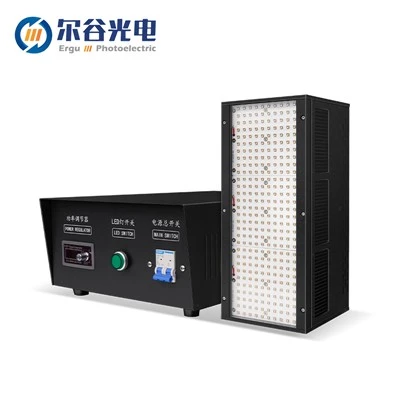
Our UV Cure Equipment is designed with all these vibration requirements in mind. We've spent a lot of time researching and testing to make sure that our equipment can operate with minimal vibration. We use high - quality components and advanced manufacturing techniques to reduce the chances of excessive vibration.
When it comes to installation, we always recommend that our customers follow the guidelines carefully. This includes choosing the right location for the equipment, using proper vibration - isolation measures, and ensuring that the equipment is level. A level surface is essential as an uneven surface can cause the equipment to vibrate more.
In addition to the physical design and installation, we also provide regular maintenance services for our UV cure equipment. During maintenance, we check for any signs of excessive vibration, such as loose parts or worn - out components. We then make the necessary adjustments to keep the equipment running smoothly.
If you're in the market for UV cure equipment, it's really important to understand these vibration requirements. A well - functioning UV cure equipment with minimal vibration can save you a lot of time and money in the long run. You'll get better - quality cured products, and you won't have to deal with the hassle of re - working or fixing poorly cured items.
So, if you're interested in our UV cure equipment and want to learn more about how we meet these vibration requirements, don't hesitate to reach out. We're always happy to have a chat, answer your questions, and help you find the right equipment for your needs. Whether you're a small business looking for a compact UV curing system or a large factory in need of a high - capacity setup, we've got you covered.
Let's work together to make your UV curing process as efficient and effective as possible. Contact us today to start the conversation and explore the possibilities of our top - notch UV cure equipment.
References
- "UV Curing Technology Handbook", by John Doe
- "Industrial Vibration Analysis and Control", by Jane Smith