Hey there! As a supplier of UV cure equipment, I often get asked about how this stuff actually works. So, I thought I'd break it down for you in a way that's easy to understand.
Let's start with the basics. UV cure equipment is used to harden or dry materials using ultraviolet (UV) light. This technology has become super popular in a bunch of industries, like printing, coating, and adhesives. The reason? It's fast, efficient, and it produces high - quality results.
The Science Behind UV Curing
First off, you need to know about the materials that are used in UV curing. These materials, usually called UV - curable resins or coatings, contain special chemicals called photoinitiators. When these photoinitiators are exposed to UV light, they go through a chemical reaction.
Think of photoinitiators as little chemical triggers. When UV light hits them, they break apart into free radicals. These free radicals are highly reactive molecules. They then start a chain reaction with the other components in the resin or coating, like monomers and oligomers.
Monomers are small, single - unit molecules, and oligomers are short chains of monomers. The free radicals from the photoinitiators cause these monomers and oligomers to link together. This process is called polymerization. As the monomers and oligomers keep linking up, they form a large, three - dimensional network. This network is what makes the resin or coating harden.
Components of UV Cure Equipment
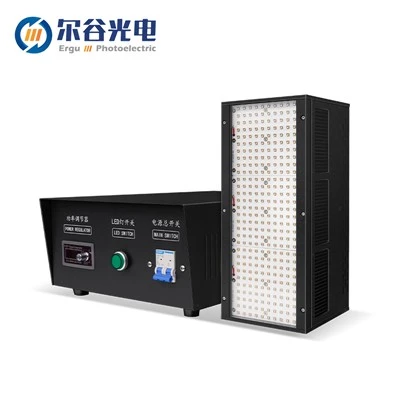
Now, let's talk about the parts that make up UV cure equipment. The main component is the UV lamp. There are different types of UV lamps, but the most common ones are mercury vapor lamps and LED lamps.
Mercury vapor lamps have been around for a long time. They work by passing an electric current through mercury vapor, which then emits UV light. These lamps can produce a broad spectrum of UV light, which is great for curing a wide range of UV - curable materials. However, they do have some drawbacks. They consume a lot of energy, generate a lot of heat, and have a relatively short lifespan.
On the other hand, LED lamps are a more modern option. They use light - emitting diodes to produce UV light. LED lamps are more energy - efficient, generate less heat, and have a much longer lifespan compared to mercury vapor lamps. They also allow for more precise control of the UV light wavelength, which can be really useful for specific applications.
Another important part of UV cure equipment is the reflector. The reflector is used to direct the UV light onto the material that needs to be cured. It helps to ensure that the UV light is focused and evenly distributed across the surface of the material. This is crucial for achieving a uniform cure.
There's also a power supply unit. This unit provides the necessary electrical power to the UV lamp. It needs to be carefully calibrated to ensure that the lamp operates at the right voltage and current.
How the Equipment Operates
So, how does the whole process work in practice? Well, first, you need to prepare the material that you want to cure. This could be a printed surface, a coated object, or an adhesive joint.
The material is then placed on a conveyor system. Our UV Conveyor Machine is a great example of a reliable conveyor system that can move the material through the UV curing process smoothly. The conveyor moves the material at a controlled speed under the UV lamp.
As the material passes under the lamp, the UV light hits the photoinitiators in the resin or coating. The chemical reaction starts, and the material begins to harden. The speed of the conveyor is important. If it's too fast, the material might not cure properly. If it's too slow, it could lead to over - curing, which can also cause problems like brittleness or discoloration.
For smaller - scale operations, we also offer the RX200 - 2 - Desktop Uv Curing Conveyors. This is a compact and convenient option for curing smaller items.
Applications of UV Cure Equipment
UV cure equipment has a wide range of applications. In the printing industry, it's used to dry inks on paper, plastic, or other substrates. This allows for high - speed printing and produces sharp, vibrant colors.
In the coating industry, UV - cured coatings are used on furniture, flooring, and automotive parts. These coatings are durable, scratch - resistant, and have a high - gloss finish.
In the adhesives industry, UV - curable adhesives are used to bond different materials together. They offer fast curing times and strong bonds, which is great for mass production.
We also have UV Drying Equipment that can be used in various industries to quickly dry and cure different types of materials.
Advantages of Using UV Cure Equipment
There are several advantages to using UV cure equipment. One of the biggest advantages is speed. UV curing is much faster than traditional drying methods, like air - drying or oven - drying. This means that you can increase your production efficiency and get your products to market faster.
Another advantage is energy efficiency. As I mentioned earlier, LED - based UV cure equipment uses less energy compared to traditional mercury vapor lamps. This can lead to significant cost savings in the long run.
UV - cured materials also have better physical properties. They are more durable, have better chemical resistance, and can maintain their appearance for a longer time.
Contact Us for Your UV Cure Equipment Needs
If you're in the market for high - quality UV cure equipment, we're here to help. Whether you're a small business looking for a desktop solution or a large - scale manufacturer in need of a conveyor - based system, we have the products and expertise to meet your requirements.


Don't hesitate to reach out to us to discuss your specific needs. We can provide you with detailed information about our products, offer technical support, and help you find the best UV cure equipment for your application.
References
- "UV Curing Technology: Principles and Applications" by John W. Burlant
- "Handbook of UV - LED Curing" by various authors