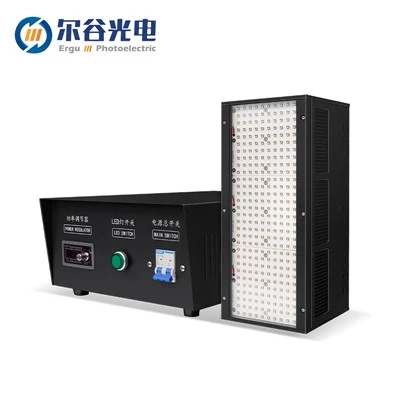
Handheld UV curing lamps are widely used in industrial, medical, and household applications. Their core function is to rapidly cure specific materials (such as glue, paint, or ink) through ultraviolet (UV) radiation. The performance and durability of these devices depend largely on the materials used, including the housing, UV lamp, reflector, and circuit components.
The housing is typically made of high-strength engineering plastics or aluminum alloys. Engineering plastics (such as ABS or PC) are lightweight, impact-resistant, and corrosion-resistant, making them suitable for portable designs. They also effectively block some UV radiation, protecting user safety. Aluminum alloy housings, on the other hand, offer greater heat dissipation efficiency and structural strength, making them suitable for high-power or extended use scenarios. Some high-end devices may feature an anti-slip coating or wear-resistant finish on the housing to enhance the user experience.
The UV lamp, the core component of the device, is primarily made of quartz glass. Quartz has an extremely high UV transmittance (over 90%), enabling efficient transmission of UV energy while also being resistant to high temperatures and chemical corrosion. The lamp is filled with mercury vapor or special gases (such as metal halides), which stimulate UV radiation when powered. In recent years, LED UV light sources have become increasingly popular. They utilize semiconductor materials such as aluminum gallium nitride (AlGaN), offering advantages such as long lifespan, low energy consumption, and immediate operation.
The reflector, typically made of polished aluminum or stainless steel, concentrates the UV light and improves curing efficiency. The aluminum reflector is anodized for enhanced durability and reflectivity. Furthermore, circuit components (such as the control module and power supply) are often constructed of flame-retardant plastic and copper wiring to ensure electrical safety and stable operation.
In summary, the material selection for handheld UV curing lamps must balance functionality, safety, and durability. The material combination of different components directly impacts the performance and lifespan of the device.